Which weekly habit feels easiest for you to start today? Most people don’t quit fitness because workouts are hard—they quit because life gets busy. Work stress, family responsibilities, low energy, or missed days slowly break motivation. This is where fitness consistency becomes more important than intensity or perfect routines.
Staying consistent with workouts helps build strength, confidence, and long-term body balance—especially for beginners. This guide is designed for people who want realistic fitness habits that fit into everyday life, not extreme plans.
From my experience, simple weekly systems are much easier to maintain than aggressive daily goals. You don’t need perfection—you need a structure that works even on busy days.
This article is regularly updated to reflect current fitness and wellness practices in 2026.
Who This Guide Is For
Beginners struggling to stay active every week
Busy people balancing work, home, and fitness
Anyone restarting fitness after long breaks
Who Should Be Careful
Those with injuries or medical conditions should seek personal guidance before starting new routines
Why Fitness Consistency Is So Commonly Broken Today
Many people start fitness with excitement but lose momentum within weeks. The main issue is not lack of motivation—it’s lack of structure. People try to follow rigid workout plans that don’t match real life.
Common struggles include:
Overestimating time and energy
Feeling guilty after missed workouts
All-or-nothing thinking
Depending only on motivation
Without flexible systems, even the best intentions fade quickly.
Fitness Consistency – What Actually Helps
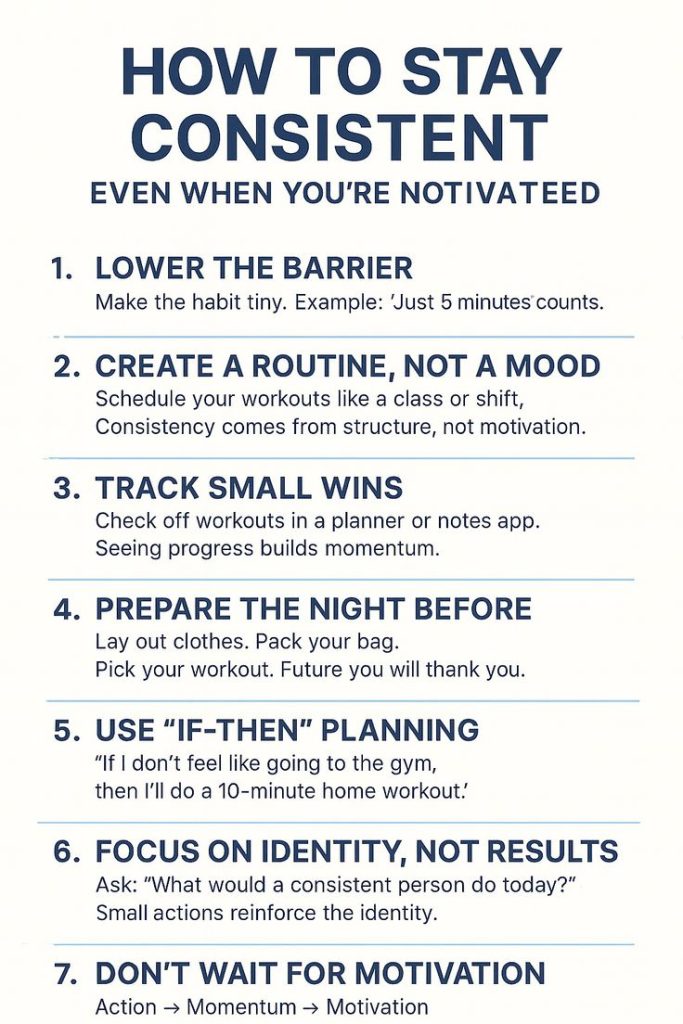
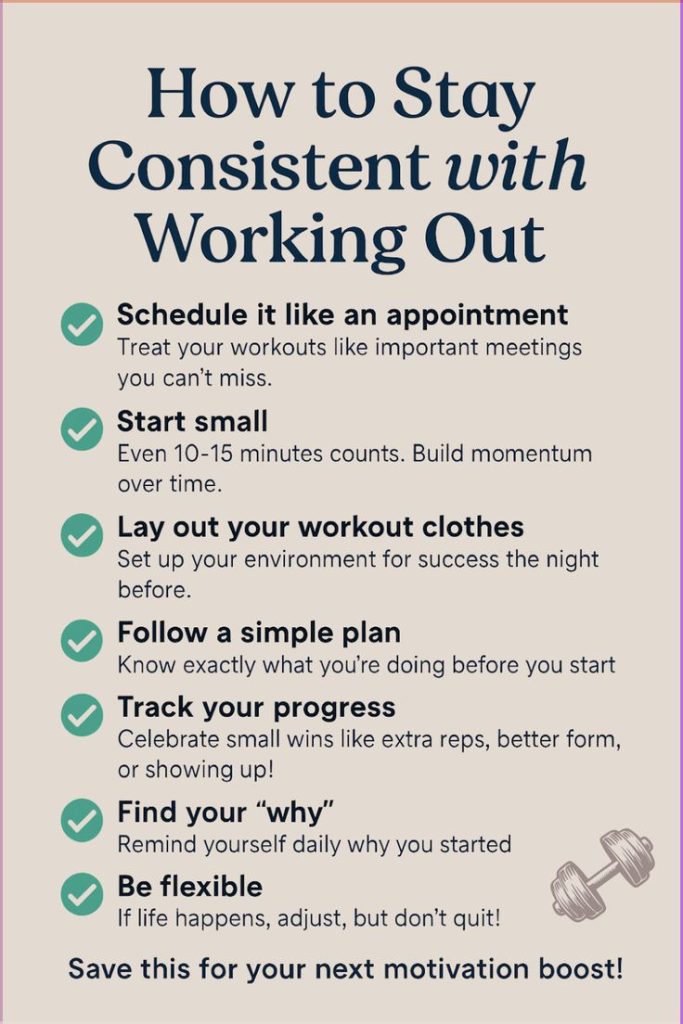
1️⃣ Set Weekly Minimum Goals (Not Daily Pressure)
Fitness consistency improves when goals feel achievable. Instead of aiming for daily workouts, set a weekly minimum—for example, 3 workouts per week.
This allows flexibility. If one day fails, the week still succeeds. Weekly goals fit better into unpredictable schedules and reduce mental stress.
Where it fits: Planning workouts around your week instead of forcing daily perfection. Why it helps: Progress continues even with missed days.
2️⃣ Anchor Workouts to Existing Habits
Consistency grows when workouts are connected to habits you already do—like morning tea, evening walks, or after work routines.
For example:
Stretching after waking up
Short workouts after returning home
Light movement before dinner
I have seen this work for many people when followed consistently because it removes decision fatigue.
3️⃣ Keep Workouts Short on Busy Days
Long workouts aren’t required for consistency. On busy days, even 10–20 minutes of movement counts.
Short workouts help you:
Maintain routine
Avoid guilt cycles
Stay mentally connected to fitness
Consistency is built by showing up—not by duration.
4️⃣ Plan Rest Days Without Guilt
Rest days are part of fitness—not failures. Planning them reduces burnout and improves recovery.
When rest is intentional, workouts feel easier and motivation stays stable across weeks.
5️⃣ Track Completion, Not Perfection
Instead of tracking calories, reps, or time, track completion:
Did you move today? Yes/No
Did you meet weekly minimum? Yes/No
This simple system builds momentum and avoids overwhelm.
6️⃣ Lower the “Restart Barrier”
Missed a week? Restart immediately without punishment. Fitness consistency improves when restarting feels easy.
Avoid:
“I’ll start Monday” mindset
Extreme compensation workouts
Small restarts maintain long-term success.
7️⃣ Focus on Identity, Not Motivation
See yourself as someone who “moves regularly,” not someone who “works out perfectly.”
This identity shift keeps habits alive even during low-energy phases.
With consistent weekly effort, fitness consistency may help:
Improve energy levels
Support strength and mobility
Reduce workout anxiety
Build sustainable fitness habits
Progress often improves when routines feel manageable.
Final Takeaway
Fitness consistency is built through flexible systems—not strict rules. Weekly goals, short workouts, and planned rest help routines survive busy days. Progress comes from repetition, not intensity. Focus on showing up consistently, even in small ways.
Small Steps Matter
Start by setting a simple weekly goal today. You may also want to:
Q1: How many workouts per week are enough for beginners? A: For beginners, 2–4 workouts per week often support fitness consistency without causing burnout.
Q2: What if I miss workouts often? A: Missed days are normal. Restarting quickly helps maintain fitness consistency over time.
Q3: Is motivation necessary to stay consistent? A: Motivation helps initially, but routines and habits support long-term fitness consistency more effectively.