
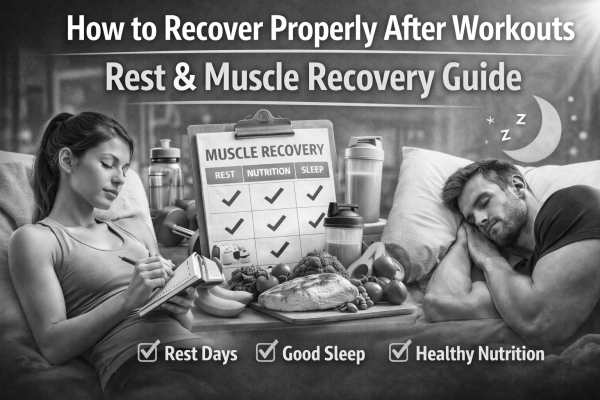
Recover Properly After Workouts : Many beginners believe that working out every single day without rest leads to faster results, but this is one of the biggest fitness mistakes. Real progress happens during recovery, not during the workout itself. When you exercise, your muscles break down slightly. When you rest, your body repairs those muscles, making them stronger and more defined.
Without proper recovery, you may face fatigue, slow progress, injuries, and burnout. This guide explains why recovery is important and how to recover properly after workouts, especially for beginners.
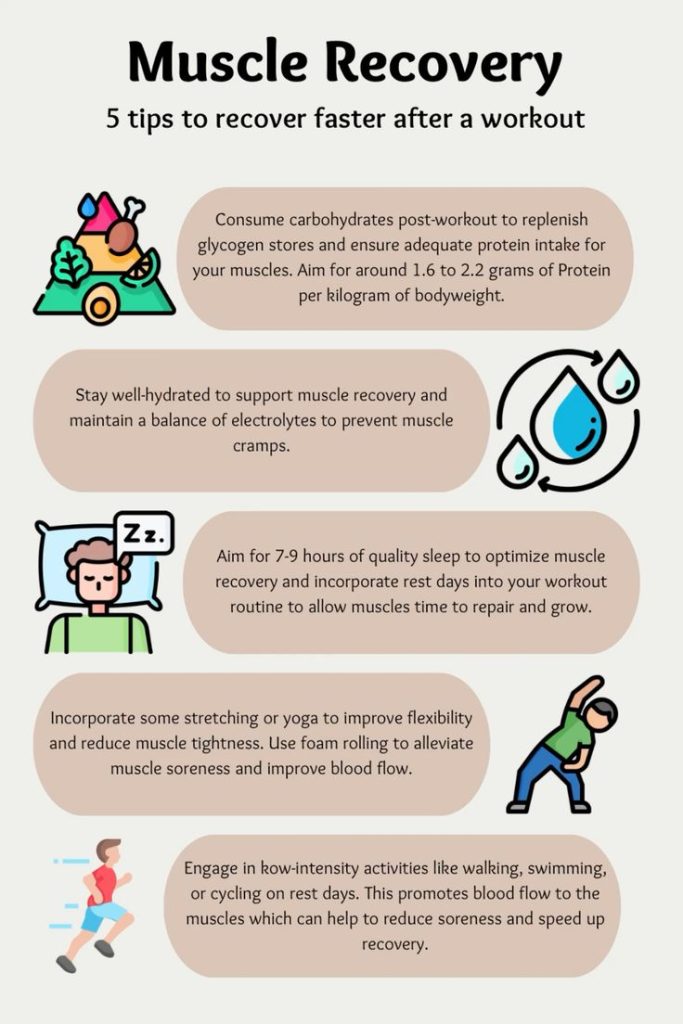
Why Workout Recovery Is Important
Workout recovery allows your body to heal, rebuild, and adapt to training stress. Without recovery, your muscles stay inflamed and weak instead of growing stronger.
Proper recovery helps you:
- Reduce muscle soreness and stiffness
- Prevent injuries and overtraining
- Improve strength and endurance
- Maintain long-term fitness consistency
- Boost mental energy and motivation
Recovery is not laziness. It is a necessary part of fitness progress.
How Muscles Recover After Exercise
During workouts, small tears occur in muscle fibers. After exercise, your body sends nutrients, oxygen, and hormones to repair these fibers. This process is called muscle protein synthesis.
Recovery depends on:
- Rest and sleep
- Nutrition and hydration
- Training intensity
- Stress levels
If any of these are ignored, muscle recovery slows down.
Importance of Rest Days
Rest days give your muscles, joints, and nervous system time to recover fully. Beginners should take at least 1–2 rest days per week.
Rest days help:
- Restore muscle strength
- Reduce joint and tendon stress
- Improve workout performance
- Lower risk of injury
Rest days do not mean doing nothing. Light movement is often beneficial.
Active Recovery vs Complete Rest
Active recovery involves gentle movement that improves blood flow without stressing muscles.
Examples of active recovery:
- Walking
- Light stretching
- Yoga
- Easy cycling
Complete rest means no physical activity and is useful when you feel extreme fatigue, pain, or illness.
A balanced fitness routine includes both active recovery and complete rest days.
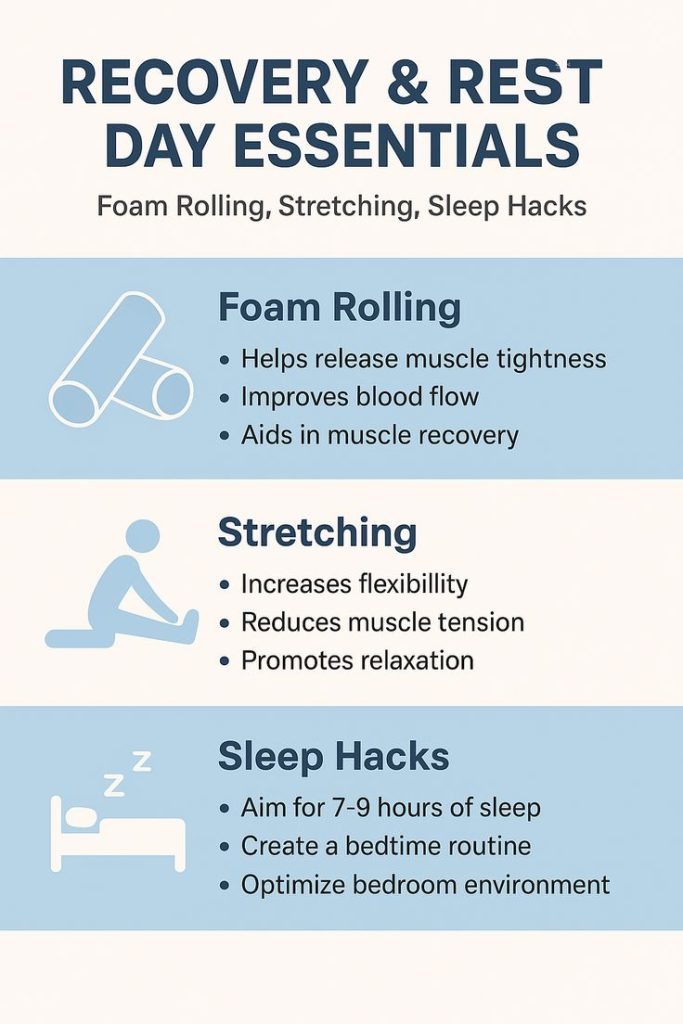
Post-Workout Recovery Tips
After each workout, recovery should begin immediately.
Effective post-workout recovery includes:
- Cooling down with slow movements
- Stretching tight muscles
- Drinking water to replace lost fluids
- Eating protein and carbs to support muscle repair
Skipping recovery after workouts increases soreness and slows progress.
Role of Sleep in Muscle Recovery
Sleep is the most powerful recovery tool. During deep sleep, your body releases growth hormone, which repairs muscles and tissues.
Poor sleep can:
- Slow muscle growth
- Increase fatigue
- Reduce workout performance
- Increase injury risk
Aim for 7–9 hours of quality sleep every night to support recovery and overall health.
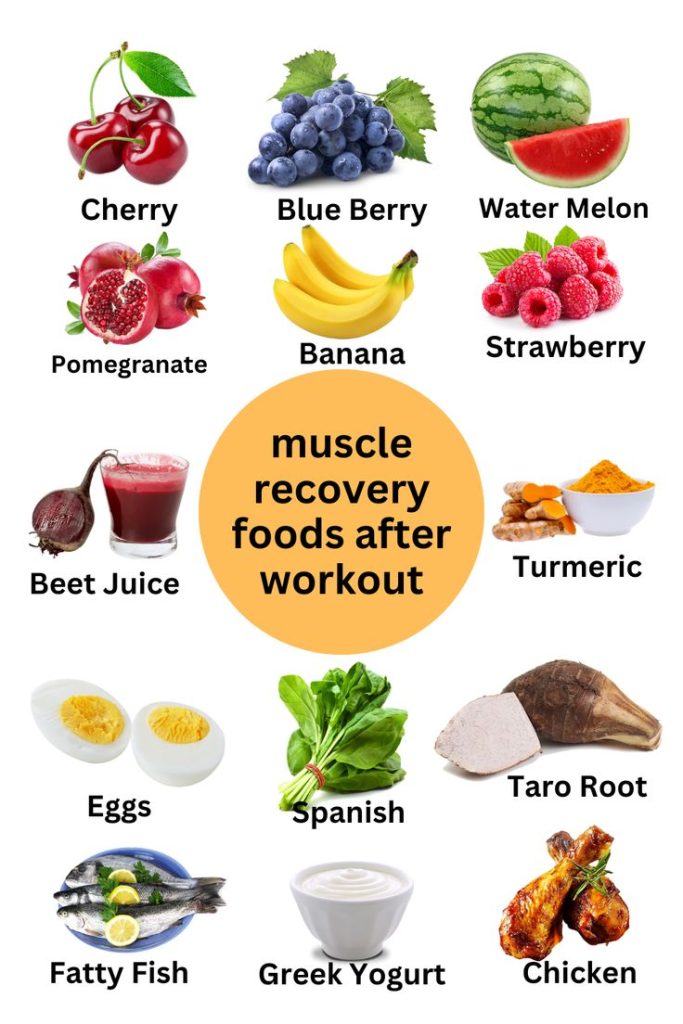
Nutrition for Faster Recovery
Your muscles need fuel to repair and grow.
Recovery-supporting nutrition includes:
- Protein for muscle repair
- Carbohydrates to refill energy stores
- Healthy fats to reduce inflammation
- Vitamins and minerals for healing
Eating balanced meals throughout the day improves recovery more than supplements alone.
Signs You Need More Recovery
Your body often warns you when recovery is insufficient.
Common signs include:
- Constant muscle soreness
- Low energy and motivation
- Poor sleep quality
- Decreased strength
- Frequent injuries
Ignoring these signs can lead to burnout or long-term setbacks.
How Beginners Should Plan Recovery
Beginners recover slower than experienced athletes, so recovery should be prioritized.
Beginner recovery guidelines:
- Train 3–5 days per week
- Include rest days between intense workouts
- Avoid training the same muscle group daily
- Focus on sleep, hydration, and nutrition
Consistency improves when recovery is planned, not ignored.
Long-Term Benefits of Proper Recovery
When recovery becomes a habit, fitness results improve naturally.
Proper recovery leads to:
- Better muscle growth
- Increased strength
- Reduced injury risk
- Sustainable fitness routine
- Long-term consistency
Fitness is not about doing more workouts. It is about recovering better between workouts.
Also Read : Beginner Exercise Plan: 15 Minutes a Day to Get Started Safely
Easy Fitness Routine for Beginners: No Equipment Needed (Start at Home)
How to Get Fit at Home: Beginner’s Edition | Simple Home Fitness Guide
Simple Fitness Habits to Kickstart Your Health | Beginner-Friendly Guide
Fitness Tips for Beginners Who Don’t Know Where to Start | Easy Start Guide
Step-by-Step Beginner Fitness Guide for Busy People | Quick & Easy Workouts
Conclusion
Workout recovery is just as important as exercise itself. Rest days, sleep, nutrition, and smart recovery habits help your body rebuild and grow stronger. Beginners who respect recovery will see better results, fewer injuries, and higher motivation over time.
Train hard, but recover smarter.
Frequently Asked Questions
How long should beginners rest between workouts?
Beginners should rest 24–48 hours before training the same muscle group again. This allows muscles to recover, rebuild, and grow stronger. Full-body workouts may need at least one rest day in between sessions.
Is muscle soreness a sign of a good workout?
Mild soreness is normal, especially for beginners, but extreme or long-lasting soreness is not a goal. Progress comes from consistent training and proper recovery, not constant pain.
Can I work out every day if I feel fine?
You can work out daily only if intensity is managed properly. Light workouts, mobility work, or active recovery days are fine, but intense strength training every day increases injury risk.
What is the best recovery method after a workout?
The best recovery method includes:
Proper sleep
Balanced nutrition with enough protein
Hydration
Light stretching or walking
There is no single magic method—combining these works best.
How important is sleep for muscle recovery?
Sleep is extremely important. During deep sleep, your body releases hormones that repair muscles and tissues. Poor sleep slows recovery, reduces strength gains, and increases fatigue.
Do I need supplements for muscle recovery?
Supplements are not mandatory. Most beginners can recover well with proper food, hydration, and sleep. Supplements should only support a good diet, not replace it.
What are signs of poor recovery or overtraining?
Common signs include:
Constant fatigue
Muscle pain lasting several days
Poor sleep
Low motivation
Frequent injuries
These signs mean you need more rest or lighter training.
Is stretching necessary for recovery?
Stretching helps improve flexibility and blood flow, but it should be gentle, not painful. Stretching supports recovery but should be combined with rest and nutrition.
Can active recovery help reduce soreness?
Yes. Light activities like walking, yoga, or mobility exercises improve circulation and reduce stiffness without stressing muscles.
How many rest days per week are ideal?
Most beginners benefit from 1–2 rest days per week, depending on workout intensity and overall lifestyle stress
Next Step: Find Your Metabolic Bottleneck
Are you a Stalled Optimizer or a Metabolic Warrior? Stop guessing and start signaling.
To find out which of your 4 biological pillars is stalling your progress, take our 2-minute diagnostic:
Take the 2026 Bio-Recovery AuditDiscover your score across the 4 Pillars of Performance: Engine, Armor, Cleanup, and Repair.