

Key Highlights for Beginners
- Signaling Safety: Fat loss only happens when the body feels it is in a state of “abundance,” not “starvation.”
- Hormonal Balance: These habits target insulin sensitivity and cortisol regulation.
- Gut-Brain Connection: Using fibermaxxing to regulate hunger signals.
- Pillar Strength: Building a foundation that supports functional independence.
🧠 What Is Metabolic Flexibility?
Metabolic flexibility refers to the body’s ability to use different fuel sources, including carbohydrates and fats, depending on activity levels, food intake, and energy needs.
In simple terms, it describes how efficiently the body adapts to changing energy demands throughout the day.
If you’ve ever felt like your weight-loss journey was an uphill battle against your own biology, you aren’t alone. In my experience as a lab technician, I’ve seen many beginners attempt to force fat loss through sheer willpower, only to be sidelined by exhaustion and persistent hunger. The challenge often isn’t a lack of effort; it is frequently related to metabolic signaling. In the modern landscape of 2026, we have moved past the era of “crushing the body” and into the era of “optimizing the signal.”

The global health focus has shifted away from the simplistic “eat less, move more” mantra. We now prioritize metabolic health optimization—the practice of creating an internal environment where the body feels balanced enough to utilize stored energy. By adopting a few simple, high-leverage habits, you can work with your body rather than against it. This guide outlines 5 effective habits that may help “prime” your metabolism, support your vagus nerve, and encourage sustainable results without the typical burnout of traditional 7-day workout plans.
🧍 What This Means in Daily Life
Metabolic flexibility is influenced by everyday habits rather than a single technique or short-term intervention.
Factors such as:
- Physical activity
- Sleep quality
- Nutrition patterns
- Stress management
can all affect how the body uses energy over time.
The Foundations of Metabolic Support
- Signaling Stability: Fat loss tends to improve when the body is in a state of perceived “safety” rather than chronic stress.
- Hormonal Balance: These habits are designed to support insulin sensitivity and healthy cortisol rhythms.
- The Gut-Brain Link: Utilizing fibermaxxing strategies to help regulate natural hunger signals.
- Functional Foundation: Building a base that encourages long-term strength and independence.
⚠️ Important Perspective
There is no single method that automatically increases fat loss or guarantees metabolic improvements.
Individual responses vary based on age, health status, activity level, and overall lifestyle habits.
Long-term consistency is generally more important than any single strategy.
The Problem: Understanding the “Survival Mode” Hurdle
Before exploring the habits, it is important to understand why many traditional approaches fall short. Often, beginners start with extreme calorie cuts and excessive cardio. From a clinical perspective, this can sometimes backfire. When the body perceives a sudden, drastic drop in energy, it may respond by increasing stress hormones like cortisol.
In this state, the body can become more resistant to releasing stored energy, particularly visceral fat. You might see a lower number on the scale, but it can be difficult to sustain because the body is protecting its energy reserves. The habits below are designed to provide a “safety signal” to your nervous system, suggesting that nutrients are available and it is appropriate to utilize stored energy for fuel.
According to research from the National Institutes of Health (NIH), chronic stress signals can actively shift the body into a fat-storage mindset by altering the way we process glucose. To see real change, we must first address the “Survival Mode” bottleneck by communicating safety to our cells.
Habit 1: The “30g-in-30” Morning Strategy
A common beginner mistake is starting the day with only caffeine or a high-sugar snack. This can lead to a blood sugar “roller coaster” that may drive intense cravings by mid-afternoon. In the lab, we often see this as a precursor to reduced insulin sensitivity and chronic fatigue.

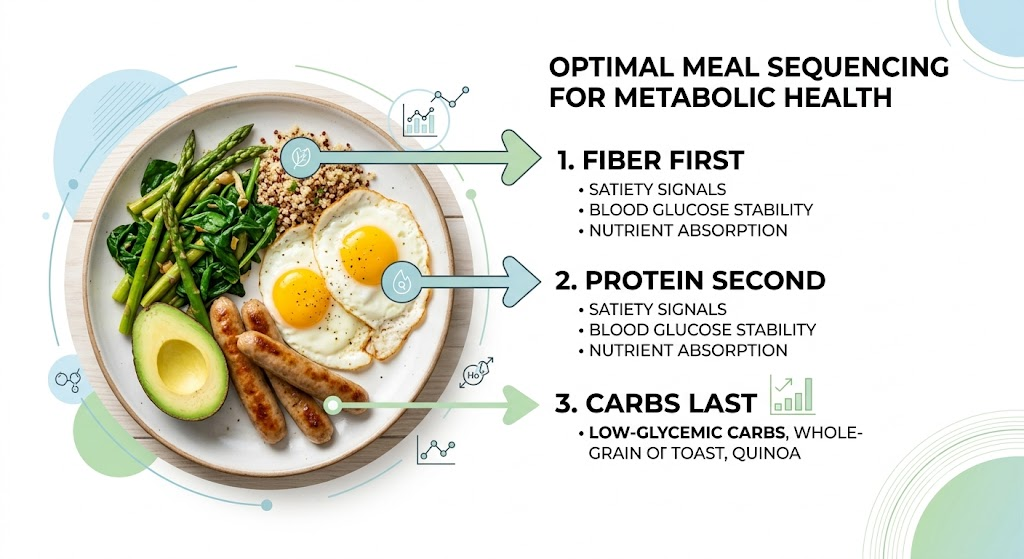
Habit 2: The “Fiber-First” Eating Sequence
Modern research suggests that the order in which you consume your food can be just as important as the food itself. This is a foundational concept in metabolic health optimization.
- The Habit: When eating a meal, try to consume your fiber (vegetables or a small salad) first, followed by your protein, and finally your carbohydrates.
- The Biological “Why”: Fiber helps create a natural barrier in the digestive tract. When you consume protein and carbs after fiber, the absorption of glucose into the bloodstream tends to be slower and more controlled.
- Gut Health Connection: This is a key part of Fibermaxxing. Feeding your gut bacteria fiber first helps them produce short-chain fatty acids (SCFAs), which are associated with improved insulin sensitivity.
- Peer-Reviewed Support: A meta-analysis published in The Lancet emphasizes that a high intake of dietary fiber is strongly associated with lower body weight and improved cardiovascular health markers.
Habit 3: The 10-Minute Post-Meal “Metabolic Flush”
Many of us are habituated to sitting down immediately after a meal. However, from a metabolic standpoint, this is the most beneficial time to be physically active, even in a very light capacity.

Habit 4: Sunlight and Vagus Nerve Alignment
Metabolic function is closely tied to your internal “clock” (circadian rhythm) and your autonomic nervous system. If these systems are out of sync, your body may prioritize stress management over fat oxidation.
- The Habit: Spend 5–10 minutes in natural sunlight shortly after waking, and practice 2 minutes of slow, diaphragmatic breathing.
- The Biological “Why”: Morning sunlight helps regulate cortisol production, ensuring it is highest in the morning (when you need energy) and lower at night. This rhythm is crucial for managing visceral fat.
- The Calm Factor: Deep breathing helps support the vagus nerve. A balanced nervous system is often a prerequisite for the body to move into a state where it can efficiently oxidize fat for fuel.
- Scientific Context: According to Frontiers in Neuroscience, stimulating the vagus nerve through slow breathing can shift the body from an inflammatory state to a metabolic repair state.
Habit 5: The Nighttime “Repair” Buffer
Late-night eating can significantly disrupt the body’s repair processes. It often keeps insulin levels elevated during the time when the body should be focused on cellular cleanup and hormonal reset.
- The Habit: Aim to finish your last meal at least 3 hours before going to sleep.
- The Biological “Why”: This buffer allows insulin levels to drop, which enables the body to release Growth Hormone during the night. Growth hormone is essential for tissue repair and efficient energy metabolism.
- The Recovery Factor: During deep sleep, the body undergoes a process of “cellular tidying” known as autophagy. Eating too close to bedtime can shift the body’s focus toward digestion, potentially impacting sleep quality and recovery.
- Clinical Observation: In my years as a lab technician, I have observed that individuals who maintain a strict nighttime fasting window show lower markers of oxidative stress and improved mitochondrial efficiency compared to those who eat right before bed.
The Science of Consistency: Why Rhythm Trumps Willpower
Why do these 5 habits often yield better results than a 7-day crash diet? The answer lies in the Sustained Signal. Your biology doesn’t typically change based on one or two extreme days; it adapts to the consistent signals you provide over time.
By providing a steady signal of high protein, stable blood sugar, and a balanced nervous system, you are essentially training your body to be more efficient. This is the core of Functional Strength and Longevity. When the “stress alarm” is turned off, the body can focus on maintaining lean mass and utilizing stored energy rather than hoarding it for a perceived emergency.
Case Study 1: Managing the “Afternoon Slump”
Subject: 36-year-old male, sedentary job, struggling with consistent fatigue and mid-section weight gain.The Intervention: We implemented Habit 1 (30g protein) and Habit 5 (The 3-hour nighttime buffer).
The Result: Within two weeks, he reported that his energy crashes had significantly decreased. After a month, he appeared less “puffy”—a sign of reduced inflammatory water retention. He reported feeling more capable of beginning a proper exercise routine. Observations suggest that by stabilizing his morning and night signals, his body was better able to manage its energy stores without the constant need for sugar or caffeine.
Case Study 2: Balancing Stress and Hunger
Subject: 44-year-old female, high-stress career, experiencing frequent sugar cravings and a weight-loss plateau.The Intervention: We focused on Habit 2 (Fiber-First sequencing) and Habit 4 (Morning Sunlight and Breathwork).
The Result: She noticed a reduction in cravings within the first week. Research suggests that the fiber-first approach can help regulate the hormones (like GLP-1) responsible for satiety. By calming her nervous system through vagus nerve support, she moved out of a constant “fight or flight” state, which allowed her to break through her fat-loss plateau without feeling deprived.
Common Beginner Mistakes & Troubleshooting
- “I’m too tired to move”: This can sometimes be a sign of magnesium deficiency. Even light movement like the “Metabolic Flush” can help improve circulation and energy.
- “Fiber makes me feel bloated”: If you are not used to a high-fiber diet, increase your fibermaxxing intake gradually. Ensure you are drinking plenty of water to help process the additional bulk.
- “I missed a day”: The 2026 Protocol is about a long-term rhythm, not perfection. If you miss a habit, don’t throw away the whole day. Just pick up with the next available habit.
- “I’m still hungry in the morning”: This often happens if Habit 1 is too small. Ensure you are hitting at least 30g of protein to trigger the satiety signal in the brain.
Comparison: Survival Mode vs. Optimized Habits
| Feature | Survival Mode (Stressed) | Metabolic Optimization |
| Morning Signal | High Stress / No Fuel | Stable / Protein Paced |
| Blood Sugar | Significant Spikes/Crashes | Flattened Glucose Curve |
| Nervous System | Sympathetic Dominant | Balanced Vagal Tone |
| Fat Loss | Often Stalled by Cortisol | Supported by Insulin Stability |
| Energy Levels | Peaks and Valleys | Sustained / High Clarity |
| Recovery | Limited Overnight Repair | Supported Growth Hormone Release |
Frequently Asked Questions
Q: Can I still have my morning coffee? A: Yes, but try to have it with or after your protein. On its own, coffee can sometimes increase cortisol for certain individuals, which may impact visceral fat loss.
Q: How do these habits help with mental clarity? A: Mental fog is often linked to blood sugar fluctuations and inflammation. By stabilizing your glucose levels (Habit 2 & 3) and supporting your neuro-fitness, you may notice a significant improvement in focus.
Q: Is it okay to work out 7 days a week? A: In 2026, we prioritize rhythm over volume. While daily movement is encouraged, high-intensity training 7 days a week often leads to “over-reach,” which can stall fat loss by spiking cortisol.
Q: Should I use C8 MCT Oil? A: C8 MCT oil can be a useful tool for supporting metabolic flexibility, but it should be used in addition to, not as a replacement for, your whole-food protein hit.
Q: What is the single most important habit for longevity? A: Preserving lean muscle mass. Muscle is the primary driver of metabolic health and a key factor in maintaining independence as you age.
Final Takeaway: Building Your Metabolic Resilience
In 2026, we’ve learned that sustainable body change is the result of a system that functions well. These 5 habits are more than just tips; they are the foundation for Metabolic Resilience. By respecting your body’s internal signals and providing consistent “data” through nutrition and movement, you are supporting your long-term health and independence.
True progress often happens through small, consistent choices—the short walk after dinner, the morning breathwork, the choice of fiber before carbohydrates. These actions tell your body that it is safe to be strong and healthy. As you implement these habits, remember that your biology is on your side; you just need to provide the right signals.
Disclaimer: This information is for educational purposes only and is not intended as medical advice. Individual results may vary. Consult a professional before starting any new nutritional or exercise protocol. Use at your own risk.
⚠️ Disclaimer
This article is for educational purposes only and is not intended as medical, nutritional, or fitness advice. Individual results may vary.
📚 References
- National Institutes of Health (NIH)
- National Center for Biotechnology Information (NCBI)
- Harvard Health Publishing
- American College of Sports Medicine (ACSM)
- Cleveland Clinic
Next Step: Find Your Metabolic Bottleneck
Are you a Stalled Optimizer or a Metabolic Warrior? Stop guessing and start signaling.
To find out which of your 4 biological pillars is stalling your progress, take our 2-minute diagnostic:
Take the 2026 Bio-Recovery AuditDiscover your score across the 4 Pillars of Performance: Engine, Armor, Cleanup, and Repair.