

Most people associate fitness with visible muscles, weight loss, or high-intensity athletic performance. Yet, one of the most important aspects of physical fitness often receives far less attention: leg strength. Whether you are climbing stairs, carrying heavy groceries, walking long distances, or simply getting up from a low chair, your lower body plays a central role in nearly every movement you perform throughout the day.
In our modern world, we are surrounded by automated conveniences—elevators, escalators, rideshare apps, and desk-bound work setups. Because our daily environment no longer forces us to exert our lower limbs, a quiet epidemic of neuromuscular disuse is taking place. Failing to actively maintain your leg strength does not just change how your clothes fit; it gradually compromises your physical autonomy, alters your structural alignment, and shifts your overall metabolic health.
This post cuts through the superficial fitness marketing to look at the structural reality of your lower body. By understanding how your legs function as a unified kinetic machine, you can protect your physical independence, improve your daily energy, and build a resilient body that ages with strength and confidence.
What Does Leg Strength Actually Mean?
When we talk about leg strength, it is easy to focus purely on the visual shape of individual muscles. However, true lower-body strength is a complex combination of muscular volume, structural joint stability, and coordinated nervous system communication. It is the ability of your lower extremities to safely absorb, manage, and exert mechanical force against gravity during daily life.
To understand how this system handles weight, we must look at the primary muscle groups that form your lower-body kinetic chain:
- The Quadriceps Femoris: A large group of four muscles located on the front of your thigh. They work together to extend your knee joint and flex your hip, providing the essential power needed to push your body upward when climbing stairs or standing up from a seat.
- The Hamstrings Complex: A trio of muscles running down the back of your thigh. They perform the vital tasks of bending your knee and extending your hip, acting as a powerful brake to stabilize your knees during movement.
- The Gluteal Complex: Consisting of the gluteus maximus, medius, and minimus, these are the largest and most powerful muscles in your body. They drive your hips forward, support your upright posture, and keep your pelvis steady.
- The Triceps Surae (Calves): Comprising the gastrocnemius and soleus muscles, your calves manage ankle movement (plantarflexion), pressing your foot into the ground to propel you forward when walking or running.
- The Deep Hip Stabilizers: A network of smaller, deeper muscles—including the piriformis and obturator systems—that manage the alignment of your thigh bone within your hip socket, keeping your joints tracking smoothly.
Functional Strength vs. Muscle Size
There is a profound difference between hypertrophy (simply increasing the physical size of a muscle) and neuromuscular functional strength (the ability of your brain to efficiently recruit and fire muscle fibers).
You do not need massive, bodybuilder-style legs to possess exceptional functional strength. Functional strength depends heavily on your nervous system’s ability to coordinate muscle actions, stabilize your joints, and react instantly to shifting forces in your daily environment.
Why Strong Legs Matter Beyond Exercise
Lower-body strength is not something that only matters when you are working out in a gym. It is the literal foundation for your continuous interaction with the physical world, impacting your productivity, safety, and daily comfort.
Real-World Impacts of Lower-Body Functional Strength
| Daily Lifecycle Domain | How Lower-Body Power Directly Influences It |
|---|---|
| Daily Structural Movement | • Allows you to walk, lift, bend, and carry everyday loads without experiencing premature fatigue or joint strain. |
| Long-Term Independence | • Ensures you can perform foundational movements, like getting up from a floor or low seat, completely unassisted. |
| Professional Productivity | • Minimizes the structural lower-back fatigue and physical strain that commonly occur from standing or sitting for long periods. |
| Recreation & Hobbies | • Fuels your ability to enjoy hiking, gardening, playing sports, and traveling without physical limitations. |
| Movement Confidence | • Provides a deep sense of balance and coordination, reducing the mental anxiety of navigating uneven surfaces. |
When your legs are chronically weak, every basic movement requires a high percentage of your maximum physical capacity. A task as simple as carrying a heavy load of laundry up a flight of stairs can push your cardiorespiratory and muscular systems to their absolute limits, leaving you exhausted.
By building a robust reservoir of lower-body strength, you lower the relative physical demand of everyday activities, leaving you with more energy and vitality at the end of the day.
A Public Health Perspective on Physical Function
Through my background in laboratory science and public health, I have often seen how modern health discussions can become overly focused on laboratory markers, body weight, or individual biological measurements. While diagnostic numbers and tracking indicators certainly provide valuable health data, your day-to-day physical function remains equally important for your overall quality of life.
The ability to move comfortably, maintain your balance, and stay active has an incredible, direct impact on your long-term well-being. One clear observation that stands out in public health data is that individuals who maintain regular lower-body physical activity report significantly greater ease with everyday tasks than those who spend the majority of their time sitting.
When a person’s lower body begins to weaken from a sedentary lifestyle, it alters their entire health trajectory. They begin to unconsciously avoid walking distances, climbing stairs, or carrying items, which quickly accelerates their physical decline.
True preventive health is not just about managing numbers on a lab report; it is about protecting the neuromuscular strength and mechanical autonomy required to live your life with freedom and vitality.
The Close Link Between Leg Strength and Mobility
Your mobility—the physical ability to move freely and easily through your environment—is directly dictated by the strength of your lower extremities. Without sufficient muscular force, basic daily movements become progressively more difficult, forcing your body to rely on unnatural compensations.
Consider the simple mechanics of walking. Every single step you take requires your lead leg to absorb the impact of your body weight hitting the floor, while your trailing leg must produce enough force to propel you forward. When your quadriceps and glutes are weak, your body alters its natural walking gait, shortening your stride and causing uneven friction across your hip and knee joints.
This mechanical strain becomes even more obvious when climbing stairs or rising from a deep chair. These movements require your muscles to execute a concentric contraction against the full pull of gravity.
If your lower body lacks the strength to perform these actions cleanly, your body is forced to compensate by twisting your trunk or pulling excessively with your upper body. Over time, this repetitive, faulty movement pattern places severe stress on your lumbar spine, frequently leading to chronic lower back pain.
Leg Strength and Healthy Aging
As we navigate our later decades, maintaining our physical strength becomes one of our most vital health goals. Beginning around age 30, the human body begins a natural, gradual decline in skeletal muscle mass and functional quality—a process known as sarcopenia.
Left unmanaged, this loss of muscle mass accelerates sharply after age 60, preferentially targeting your fast-twitch muscle fibers—the specific fibers responsible for generating rapid, powerful movements. Along with this loss of mass comes dynapenia, the decline in our nervous system’s ability to quickly signal and activate our muscles.
This dual decline is the primary driver behind the structural frailty that affects many older adults. When lower-body power drops below a critical threshold, individuals lose the physical ability to perform basic daily tasks, leading to a loss of independence.
By engaging in regular, progressive lower-body resistance training, you can directly combat this decline. Challenging your muscles wakes up dormant neural pathways, preserves vital fast-twitch fibers, and helps you maintain your physical freedom for decades to come.

Why Leg Strength Supports Better Balance
Many people believe that balance is entirely an issue of the inner ear or general mental focus. While your vestibular system is certainly important, your ability to stay upright is ultimately executed by the muscles of your lower extremities. Your legs act as the mechanical anchors that translate balance signals into actual physical stability.
When you trip or step onto an uneven surface, your brain must quickly recognize the imbalance and send an instantaneous message to your lower-body muscles to correct your posture. If your ankles, quadriceps, and hip stabilizers are strong and well-coordinated, they can contract with the speed and force necessary to restore your center of gravity.
If those muscles are weak or slow to react, that minor trip can easily turn into a severe, dangerous fall. Public health research consistently shows that building lower-body strength and joint control is one of the most effective ways to reduce fall risks, providing you with a reliable baseline of structural security.
To learn more about optimizing your recovery routines to support your strength training, see FitBodySync’s Essential Guide to Muscle Recovery.
Common Signs Your Leg Strength May Need Improvement
A loss of lower-body strength rarely happens overnight. Instead, your body sends subtle signals that your neuromuscular system is struggling to handle its daily physical demands. Recognizing these warning signs early allows you to take action before structural limitations set in:
- Increased Difficulty Climbing Stairs: If navigating a single flight of stairs leaves your thighs burning intensely or causes you to rely heavily on the handrail, your quadriceps and glutes are likely lacking functional power.
- Early Fatigue During Normal Walks: Feeling a deep sense of fatigue or heaviness in your calves and thighs during a casual walk signifies a drop in muscular endurance.
- Frequent Stumbling or Unsteady Balance: Finding yourself frequently catching your foot on minor sidewalk cracks or feeling unstable on uneven terrain points to poor ankle and hip stabilization.
- Difficulty Standing Up After Sitting: If you find yourself needing to rock your torso forward or use your arms to push yourself up from a standard chair, your lower-body extensions are missing essential power.
- An Unconscious Urge to Avoid Activity: The subtle, psychological tendency to choose elevators over short stairs or avoid active outings is often an unconscious sign that your body is trying to protect weak muscles from physical strain.
Common Myths About Leg Training
Outdated fitness dogmas and misconceptions often prevent individuals from pursuing proper lower-body strength training. Let’s break down the most common myths:
Myth 1: Only Competitive Athletes Need to Train Their Legs
The Clinical Reality: While athletes certainly require explosive leg power for performance, lower-body strength is a fundamental requirement for every human being. Daily movements like walking, standing, and carrying loads depend entirely on your lower limbs. Training your legs is an essential investment in your long-term mobility and daily health.
Myth 2: Casual Walking is Enough to Maintain Your Leg Strength
The Clinical Reality: Walking is an excellent, highly beneficial low-impact activity for your cardiovascular system and mental wellness. However, it does not provide the level of mechanical tension required to build or preserve fast-twitch muscle fibers. To effectively protect your body against age-related muscle loss, you must complement your walking with progressive resistance training.
Myth 3: Challenging Leg Exercises are Only Safe for Younger Adults
The Clinical Reality: Muscle tissue retains its ability to adapt and grow stronger at absolutely any age. When adjusted properly to match an individual’s current capabilities, resistance training is incredibly safe and highly necessary for older adults. It serves as a primary defense against structural frailty and loss of balance.
Myth 4: You Must Have Access to a Gym to Build Strong Legs
The Clinical Reality: Your muscles cannot see what environment you are in; they simply react to mechanical stress and tension. You can build exceptional, functional lower-body strength right at home using bodyweight movements, resistance bands, or simple household items. Consistency and proper form matter far more than expensive gym equipment.
Practical Ways to Improve Leg Strength
Building stronger legs does not require a complex or extreme workout routine. The most effective approach is to focus on foundational, functional movement patterns that challenge your muscles using a progressive and sustainable strategy.
1. Structured Daily Walking
Walking serves as the perfect low-impact baseline for lower-body endurance and joint health. To maximize its benefits, introduce varied terrain into your routine. Walking up hills or navigating uneven trails forces your glutes, hamstrings, and stabilizing muscles to work much harder than they would on a flat treadmill, improving your overall lower-body coordination.
2. The Bodyweight Squat
The squat is one of the most foundational human movement patterns. To perform it safely:
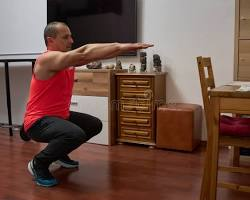
- Stand with your feet shoulder-width apart, with your toes turned slightly outward.
- Brace your abdominal muscles and lower your hips down and back, as if you are lowering yourself into an invisible chair.
- Keep your chest upright and ensure your knees track in line with your feet, without collapsing inward.
- Lower down until your thighs are parallel to the floor, then drive firmly through your heels to return to a standing position.
Tip for Beginners: If you are new to the movement, practice a Box Squat by lowering yourself down until your hips lightly touch a sturdy chair, then push back up to standing.
3. The Functional Lunge
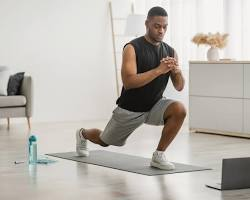
Lunges are excellent for building single-leg strength, improving coordination, and challenging your balance. Take a controlled step forward with one leg, lowering your hips until your back knee approaches the floor at roughly a 90-degree angle. Keep your torso upright and your front foot planted firmly, then press through your front heel to step back to the starting position.
4. The Step-Up
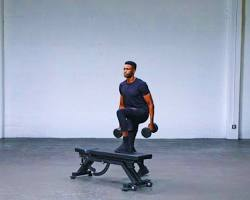
Step-ups directly mimic the mechanics of climbing stairs, making them an incredibly practical exercise for daily life. Step one foot onto a sturdy bench or step, press down firmly through your heel, and drive your body upward until your leg is completely straight. Lower yourself back down with control. Focus on using your lead leg to lift your weight, rather than pushing off with your trailing foot.
5. Embracing Progressive Overload
To ensure your muscles continue to adapt and grow stronger, you must implement the principle of progressive overload. This means gradually increasing the challenge your muscles face over time. You can achieve this by adding light weights, performing a few more repetitions, slowing down the movement to increase time under tension, or reducing your rest periods between sets.
For insights on combining functional leg training with systemic cardiorespiratory conditioning, explore FitBodySync’s Comprehensive Guide to Zone 2 Aerobic Training.
Common Mistakes People Make
When launching a new lower-body training routine, it is important to watch out for common pitfalls that can stall your progress or lead to unnecessary injury:
- Completely Skipping Leg Workouts: Focus heavily on your upper body while neglecting your legs creates structural imbalances that can compromise your posture and joint health.
- Doing Too Much Too Soon: Diving into advanced, high-intensity workouts without building a proper foundation causes extreme muscle soreness and increases your risk of joint inflammation.
- Ignoring Proper Recovery: Your muscles do not grow stronger during the actual workout; they rebuild during periods of rest. Skipping sleep or training sore muscles continuously can lead to overtraining and injury.
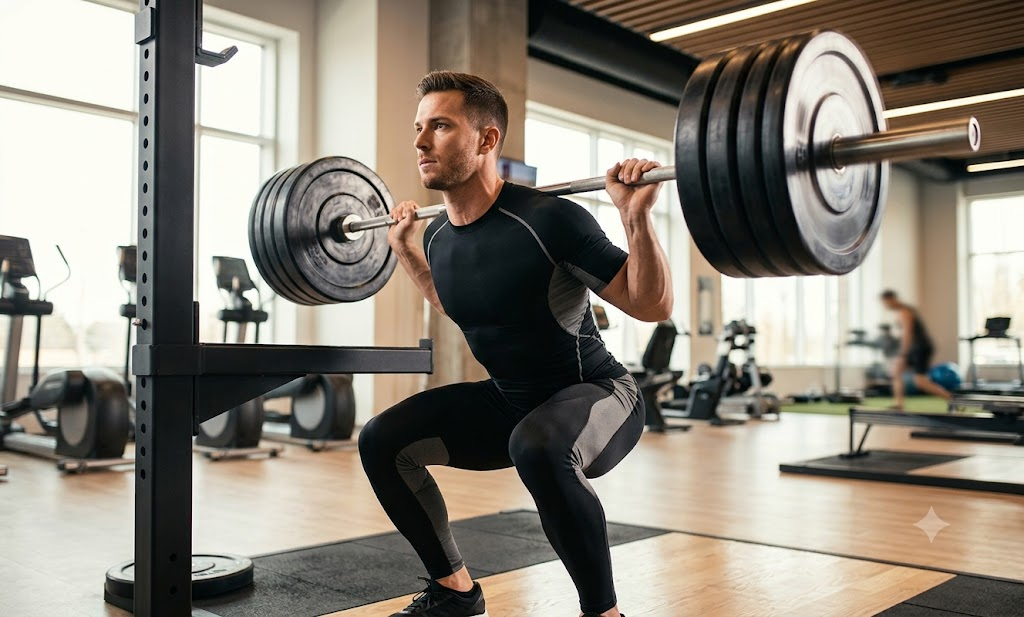
- Allowing Your Technique to Slip: Prioritizing heavy weights or high repetitions over clean, controlled form can place dangerous, uneven stress on your lower back and knee joints.
- Inconsistent Training Schedules: Working out your legs sporadically every few weeks does not provide enough stimulus for long-term neural or muscular adaptations. Consistency is key.
A Simple Beginner Weekly Plan
To help you get started safely and effectively, here is a balanced, easy-to-follow beginner weekly template that you can perform entirely at home.
The FitBodySync Foundational Lower-Body Weekly Template
🗓️ MONDAY: FOUNDATIONAL STRENGTH BLOCK
– Activity: 20-Minute Brisk Walk (Varying pace)
– Strength: 3 Sets of 10 Controlled Box Squats
– Goal: Focus on keeping your chest upright and driving through your heels.
🗓️ WEDNESDAY: UNILATERAL BALANCING BLOCK
– Activity: 3 Sets of 8 Controlled Step-Ups (Per leg)
-Strength: 2 Sets of 30-Second Single-Leg Balance Holds
-Goal: Build stability in your ankles and hips.
🗓️ FRIDAY: MOVEMENT COORDINATION BLOCK
– Activity: 3 Sets of 6 Reverse or Forward Lunges (Per leg)
-Strength: 3 Sets of 12 Bodyweight Calf Raises
-Goal: Move slowly and focus on smooth, steady balance.
🗓️ WEEKEND: ACTIVE SYSTEMIC RECOVERY
– Activity: 30–45 Minute Casual Walk on an outdoor trail
-Goal: Promote healthy blood flow, clear metabolic waste, and relax.
Why Consistency Matters More Than Intensity
The secret to building lasting lower-body strength does not lie in completing an exhausting, high-intensity workout once a week. It is built entirely on the consistency of your routine over time. Your nervous and muscular systems require regular, predictable stimulation to reinforce neural pathways and support muscle growth.
Choosing a moderate, accessible routine that you can comfortably stick with week after week is infinitely more valuable than pushing yourself to the point of exhaustion and quitting due to burnout or injury. By building sustainable, daily habits, you allow your joints, tendons, and muscles to adapt safely, ensuring long-term success and protecting your health for years to come.
To discover how maintaining consistent exercise habits supports your metabolic health, explore FitBodySync’s Resource Center on Metabolic Health.
Frequently Asked Questions (FAQ)
1. Can routine daily walking alone build sufficient leg strength?
Walking is a fantastic activity for your cardiovascular conditioning and low-level metabolic health, but it is not enough to build significant muscular strength. Because walking relies primarily on low-threshold, slow-twitch muscle fibers, you need to combine it with progressive resistance exercises to challenge your fast-twitch fibers and prevent age-related muscle loss.
2. How many times per week should I perform targeted leg exercises?
For optimal muscle preservation and neural adaptations, clinical guidelines recommend targeting your lower-body muscle groups 2 to 3 times per week. Always ensure you allow 48 to 72 hours of recovery between intense training sessions to let your tissues repair safely.
3. Are bodyweight exercises effective enough to build real leg strength?
Yes. Bodyweight movements like deep squats, step-ups, and lunges are highly effective for building functional strength, improving coordination, and enhancing your balance. Your nervous system simply reacts to mechanical tension; you can make bodyweight exercises more challenging by slowing down your movements or increasing your repetitions.
4. Does lower-body strength naturally decline as we get older?
Yes, your muscle mass and neural power naturally trend downward as you age—a process known as sarcopenia and dynapenia. However, this decline is heavily accelerated by a sedentary lifestyle. Engaging in regular, progressive resistance training can slow down, halt, or even reverse much of this loss.
5. Can older adults safely start a leg strength routine?
Absolutely. Muscle tissue retains its remarkable ability to adapt and grow stronger at any stage of life. Older adults can safely build strength by starting with gentle, supported exercises—like chair squats or wall sits—and gradually increasing the challenge as their mobility and confidence improve.
Conclusion
Strong legs are about far more than athletic performance, visual muscle shape, or a number on a fitness app. Your lower body serves as the literal chassis for your entire organism, providing the structural power, joint stability, and metabolic support that allow you to navigate the physical world with freedom and ease.
Investing in your lower-body strength is a profound commitment to your long-term healthspan. By taking the time to build a consistent, intelligent routine centered around functional movements, progressive loading, and mindful recovery, you aren’t just making daily tasks like climbing stairs or carrying loads easier today. You are actively protecting your independent mobility, anchoring your metabolic health, and building a resilient body that will allow you to live your life with strength, confidence, and autonomy for decades to come.
Disclaimer: The information provided in this article is for educational and informational purposes only and is not intended as medical or professional health advice. Always consult with a qualified healthcare professional or physician before beginning any new exercise program, making changes to your physical activity, or addressing any chronic health conditions or pain.
References
- World Health Organization (WHO): Global Recommendations on Physical Activity and Sedentary Behavior for Long-Term Healthspan Preservation
- Centers for Disease Control and Prevention (CDC): Adult Physical Activity Guidelines and Musculoskeletal Prevention Resources
- National Institute on Aging (NIA): Exercise and Physical Activity Guide for Preventing Age-Related Sarcopenia and Maintaining Autonomy
- American College of Sports Medicine (ACSM): Progression Models in Resistance Training for Hypertrophy and Functional Neuromuscular Strength
Next Step: Find Your Metabolic Bottleneck
Are you a Stalled Optimizer or a Metabolic Warrior? Stop guessing and start signaling.
To find out which of your 4 biological pillars is stalling your progress, take our 2-minute diagnostic:
Take the 2026 Bio-Recovery AuditDiscover your score across the 4 Pillars of Performance: Engine, Armor, Cleanup, and Repair.