

If you had to pick one exercise that translates directly to “real life” durability, it wouldn’t be the bench press or the bicep curl. It would be picking something heavy up and walking with it. This is the Loaded Carry, and it is the undisputed king of functional movement.
Most people don’t realize how effective this is until they actually try it—carries feel deceptively easy for about 20 seconds, and then suddenly, your entire body “lights up.” Your grip starts to burn, your shoulders begin to shake, and your core tightens in a way that a thousand crunches could never replicate. It is the ultimate “integrity check” for the human frame.
In 2026, we don’t just train for looks; we train for structural integrity. A loaded carry forces your body to stabilize under a shifting load, mimicking the actual demands of life. Much like the results I saw when I tried home workouts for 30 days, the most basic movements often yield the most profound metabolic shifts.
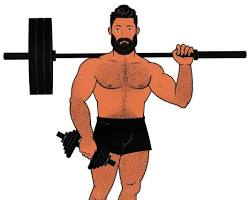
Who This Guide Is For
- The Stalled Optimizer: You’ve hit a plateau in your big lifts or your fat loss has stalled. Your core is likely the “power leak,” and loaded carries are the active stabilization your system is missing.
- The Metabolic Warrior: You want to maximize calorie burn and hormonal response in the shortest time possible. You understand that “heavy walking” is one of the most metabolically demanding activities a human can perform.
A Note on Safety: Clinical Contraindications
Loaded carries are safer than most heavy lifts because the “failure” point is simply dropping the weights. However, according to the Mayo Clinic, individuals with acute disc herniations or unstable high blood pressure should be cautious. Always maintain a “tall spine” and never sacrifice form for distance. If your posture collapses, the set is over.
🧠 What Are Loaded Carries?
Loaded carries are strength-training exercises that involve carrying a weight while walking for a specific distance or duration.
Common variations include:
- Farmer carries
- Suitcase carries
- Front rack carries
- Overhead carries
These exercises are frequently used in strength and conditioning programs.
🏋️ Potential Benefits of Loaded Carries
Loaded carries may help develop:
- Grip strength
- Core stability
- Balance
- Coordination
- Overall functional movement
Individual results vary depending on training experience, exercise selection, and consistency.
🧍 What This Means in Daily Life
Many daily activities involve carrying objects such as:
- Grocery bags
- Luggage
- Household items
- Work equipment
Exercises that involve carrying weight can help people practice movement patterns commonly encountered in everyday life.
⚠️ Important Perspective
No single exercise is essential for every person.
Exercise selection should be based on:
- Fitness level
- Training goals
- Equipment availability
- Mobility considerations
- Personal preference
Loaded carries are one of many exercises that may be included within a balanced fitness program.
The Modern Mismatch: The “Unloaded” Human
Modern life has effectively removed the “load” from our movement. We don’t carry water, we don’t carry heavy tools, and we rarely carry anything heavier than a laptop bag. This has led to “core amnesia”—a state where the muscles surrounding the spine forget how to brace under pressure.
According to the National Institutes of Health (NIH), a lack of structural load leads to faster bone density loss and postural collapse. This mismatch is why back pain is so prevalent today. To fix this, you need to re-engage your 2026 Metabolic Switch by forcing the body to work as a single, unified unit under tension.
What Actually Helps: The Biological Power of Carries
When you pick up heavy weights and walk, you trigger three strong biological adaptations:
- Weighted Stability: You force the deep “inner unit” of the core to fire constantly to protect the spine.
- Hormonal Signaling: Carrying heavy loads triggers a systemic response—telling your body it needs to be more resilient and metabolically active.
- Metabolic Demand: Because almost every muscle is under tension, your heart rate spikes, turning a “strength” move into a “cardio” move.
Case Study 1: The “Fragile” Strength Athlete (The Stalled Optimizer)
The Problem:
ames, 45, could deadlift heavy but always felt “tweaky” and stiff. He had plenty of muscle but zero structural durability. His core was “leaking” power because it wasn’t used to stabilizing while moving. He was strong in a static position but fragile during movement.
The Solution:
- Step 1: Introduced the “Farmer’s Walk” twice a week for 40-meter sets.
- Step 2: Integrated Rucking for Fat Loss on his off-days to build low-intensity carrying capacity.
- Step 3: Focused on “Tall Spine” cues to reset his posture during the carries.
The Result:
Within 4 weeks, James’s back pain disappeared. He increased his deadlift because his core finally felt “locked in.” He didn’t just get stronger; he felt more “solid.”
Case Study 2: The Busy Executive (The Metabolic Warrior)
The Problem:
Sarah, 38, only had 20 minutes to train. She wanted the best “bang for her buck” for fat loss and muscle tone but was bored of the treadmill. She needed a high-intensity stimulus that didn’t require an hour at the gym.
The Solution:
- Step 1: Swapped her standard HIIT for “Carry Medleys” (Farmer’s walks and suitcase carries).
- Step 2: Used Blood Flow Restriction (BFR) on her accessory moves to maximize output in less time.
- Step 3: Focused on 30-second work intervals with 30-second rest.
The Result:
Sarah lost visceral fat while noticeably increasing her shoulder and core definition. Her “Deep Work” focus also improved, proving the link between physical stability and mental performance.
The 7-Day “King of Moves” Protocol
This protocol is designed to build your “structural armor” from the ground up. Use a weight that makes the last 10 meters of each walk feel like a genuine challenge.
Day 1: Bilateral Loading (The Farmer’s Walk)
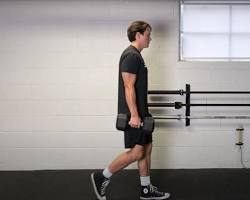
- The Movement: Hold a heavy dumbbell or kettlebell in each hand. Stand tall, pull your shoulder blades down and back, and walk with short, choppy steps.
- The Why: This is the foundation. It challenges your grip, your traps, and your total-body tension.
- The Workout: 5 sets of 40 meters.
- The “Feel”: By the third set, your forearms should feel like they are expanding. Your “Armor” is being built.
- Pro Tip: Imagine there is a wire pulling the top of your head toward the ceiling. This maintains the “Tall Spine” required for safety.
Day 2: Asymmetrical Loading (The Suitcase Carry)
- The Movement: Hold a weight in only one hand, like you are carrying a heavy suitcase. Walk 30 meters, then switch hands.
- The Why: This is the ultimate oblique and “anti-rotation” builder. Your brain has to work overtime to keep your torso from leaning toward the weighted side.
- The Workout: 4 sets of 30 meters per side.
- The “Feel”: You will feel a deep, burning sensation in the side of your core opposite to the weight.
- Pro Tip: Keep your “empty” hand slightly away from your body. Do not let it touch your leg; this forces the core to do 100% of the stabilizing work.
Day 3: Active Recovery & Vagal Tone
- The Movement: Low-intensity walking (no weight) for 30 minutes.
- The Why: High-tension carries are taxing on the Central Nervous System (CNS). Today is about recovery.
- The Workout: 30-minute walk + 10 minutes of Vagus Nerve Stimulation (box breathing).
- Objective: Shift your body from “Fight or Flight” back into “Rest and Digest” to consolidate the gains from Day 1 and 2.
Day 4: Anterior Loading (The Goblet Carry)
- The Movement: Hold a single kettlebell or dumbbell at chest height (the “Goblet” position). Keep your elbows tucked in and your chest up.
- The Why: This shifts the center of mass forward, forcing your upper back and anterior core to fire. It is the best antidote to “Computer Posture.”
- The Workout: 5 sets of 40 meters.
- The “Feel”: Your upper back muscles will feel a massive “pump,” and your abs will feel like a solid wall.
- Pro Tip: Do not let the weight rest on your chest. Keep it an inch away to maintain constant tension.
Day 5: Overhead Integrity (The Waiter’s Carry)
- The Movement: Press a light-to-moderate weight overhead and lock your arm out completely. Keep your bicep near your ear and walk.
- The Why: This builds bulletproof shoulders and extreme spinal stability. If your shoulder is unstable, the weight will let you know immediately.
- The Workout: 3 sets of 20 meters per side.
- The “Feel”: Shaking shoulders and a high degree of mental focus.
- Pro Tip: If your elbow starts to bend, the set is over. Only count the meters where your arm is fully locked.
Day 6: The Metabolic Carry Medley
- The Movement: A continuous circuit of the previous moves.
- The Workout: 1. Farmer’s Walk (20m) 2. Immediately switch to Suitcase Carry (20m Left / 20m Right) 3. Immediately switch to Goblet Carry (20m)
- Rest 90 seconds. Repeat 4 times.
- The Why: This is the fat-burning engine. By removing the rest between carry styles, you skyrocket the metabolic demand.
- The “Feel”: Total body fatigue and heavy breathing. This is where the visceral fat loss happens.
Day 7: Structural Reset & Sleep Optimization
- The Movement: Zero load. Focus on stretching and hydration.
- The Why: To allow your connective tissues to adapt to the new loads.
- The Workout: 20-minute gentle stretch + Magnesium for Athletes protocol to ensure deep sleep and muscular repair.
- Objective: Check your wearable data. Your HRV should be recovering, signaling you are ready for another week of progress.
Technical Outcomes and Biological Synergy
Carries work because they are a form of “isometric-dynamic” hybrid. Your core stays still while your legs move. This creates a massive demand on the cardiovascular system without the joint wear of high-impact cardio. By combining carries with targeted Performance Nutrition, you ensure your body uses its fat stores to fuel the high-tension demands of the “King of Moves.”
Quick Reference Performance Table
| Day | Carry Type | Primary Target | Metabolic Goal |
| 1 | Farmer’s Walk | Grip / Total Body | Structural Foundation |
| 2 | Suitcase Carry | Obliques / Anti-Rotation | Core Integrity |
| 3 | Rest/Walk | Nervous System | Recovery |
| 4 | Goblet Carry | Upper Back / Anterior Core | Postural Correction |
| 5 | Waiter’s Carry | Shoulder Stability | Joint Resilience |
| 6 | Carry Medley | Total Metabolic Engine | Max Fat Burn |
| 7 | Reset | HRV / Recovery | System Balance |
FAQ: Performance Science Deep Dive
How heavy should the weights be?
Start with roughly 25-50% of your body weight (total). If your grip starts to fail or your shoulders begin to hunch, the weight is too heavy.
Are loaded carries better than crunches?
Yes. Crunches only work a small part of the core. Carries force the entire “cylinder” of your midsection to work as a protector of your spine.
What if I don’t have heavy dumbbells?
Use what you have. Heavy grocery bags, sandbags, or a weighted backpack. According to CDC guidelines, any resistance training that challenges your muscles is beneficial for metabolic health.
How often should I do them?
2-3 times a week is the “sweet spot.” They are surprisingly taxing on the nervous system, so don’t overdo it.
Final Performance Takeaway
If you want a body that looks strong and is strong, you must carry. It is the missing link in most modern fitness programs. Stop over-complicating your training and start picking things up. Your spine, your metabolism, and your posture will thank you.
Start small. If you aren’t sure how your body handles load, focus on The Inflammation Quench to ensure your joints are healthy before adding heavy weight.
Disclaimer: The information provided in this post is for educational and informational purposes only and is not intended as medical advice. Loaded carries involve lifting and moving heavy weights, which carries an inherent risk of injury. Always consult with a qualified healthcare professional or certified trainer before beginning any new strength training regimen. Use of these protocols is at your own risk.
⚠️ Disclaimer
This article is for educational purposes only and does not provide medical or fitness advice. Exercise selection should be individualized based on personal needs, health status, and training experience.
📚 References
- American College of Sports Medicine (ACSM)
- National Strength and Conditioning Association (NSCA)
- National Institutes of Health (NIH)
- Harvard Health Publishing
- Cleveland Clinic
Next Step: Find Your Metabolic Bottleneck
Are you a Stalled Optimizer or a Metabolic Warrior? Stop guessing and start signaling.
To find out which of your 4 biological pillars is stalling your progress, take our 2-minute diagnostic:
Take the 2026 Bio-Recovery AuditDiscover your score across the 4 Pillars of Performance: Engine, Armor, Cleanup, and Repair.