

Key Takeaways: The Thermogenic Blueprint
- The TEF Advantage: Protein requires up to 30% of its own caloric value for digestion, compared to just 3-5% for fats.
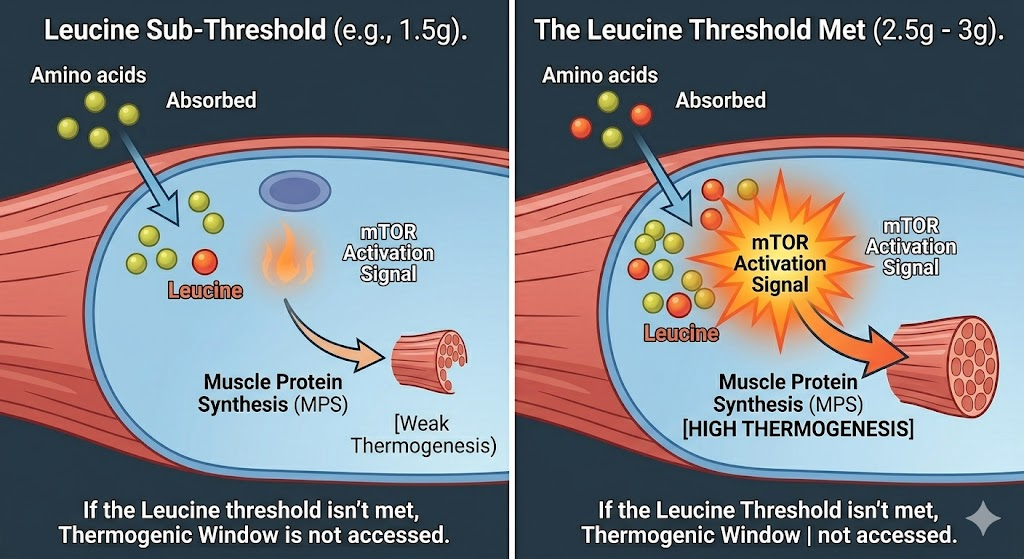
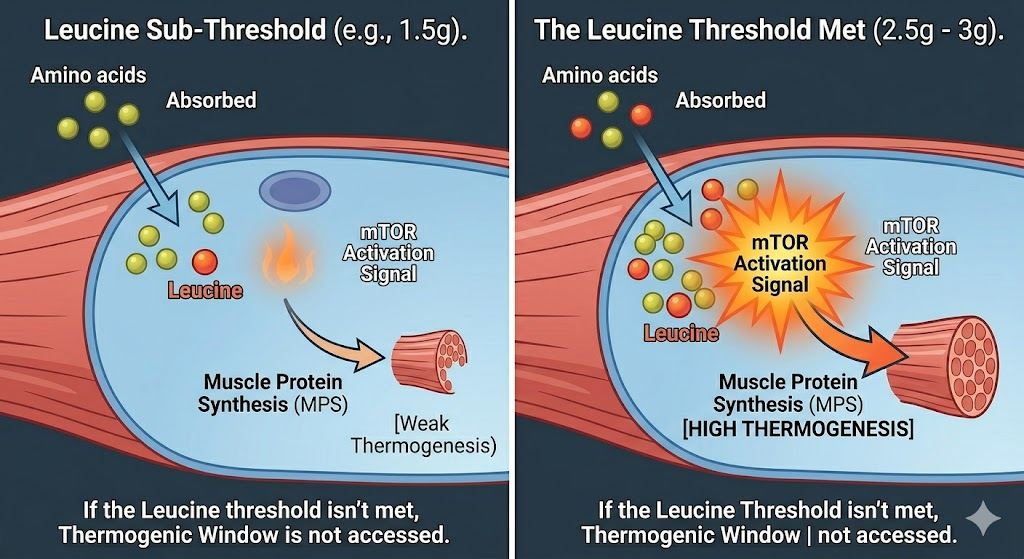
- Leucine Threshold: You must hit 2.5g–3g of Leucine per meal to trigger the metabolic “burn” signal.
- Glucagon Dominance: Protein pacing keeps the fat-mobilizing hormone glucagon elevated while suppressing insulin.
- Nitrogen Balance: Maintaining a steady supply of aminos prevents the muscle-wasting that crashes your resting metabolic rate.
- The Thermal Window: Pacing creates multiple “spikes” in body temperature throughout the day, melting visceral fat.
Ever feel warmer or slightly “active” after a high-protein meal? That’s your metabolism working. In the evolving clinical landscape of 2026, we have moved beyond the simplistic “calories in versus calories out” model to a more sophisticated understanding of metabolic signaling. As a Certified Lab Technician with extensive experience in the National Rural Health Mission (NRHM), I have observed that fat loss is rarely a matter of eating less, but rather a matter of increasing the “metabolic tax” on every calorie consumed.
A Practical Perspective
During my healthcare experience, I often noticed that many people focused only on reducing calories while paying little attention to meal quality and protein intake. In practice, adequate protein can help support satiety, maintain muscle mass during weight loss, and contribute to a more balanced eating pattern.
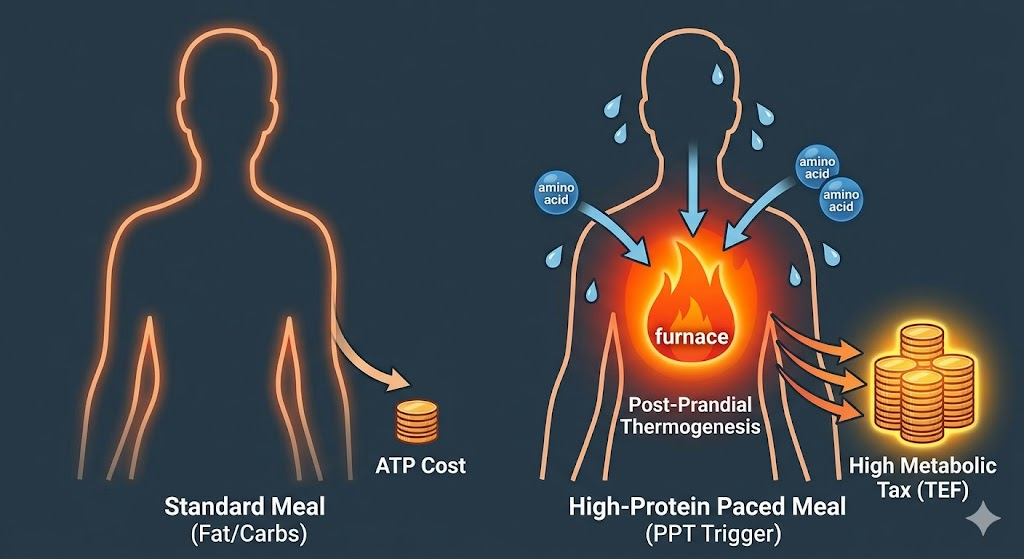
This is where Post-Prandial Thermogenesis (PPT) becomes your most powerful tool. By strategically utilizing Protein Pacing, you are not just feeding your muscles; you are intentionally spiking your core body temperature and forcing your system to burn stored energy simply to process your meals. Protein possesses the highest Thermic Effect of Food (TEF), requiring significantly more ATP to break peptide bonds compared to fats or carbohydrates. When you pace this intake, you create a sustained “thermogenic hum” that prevents the metabolic stagnation often seen in traditional dieting. This guide explores how to leverage amino acid signaling to re-sensitize insulin pathways
and protect lean mass during Time-Under-Tension training, ensuring your body remains a high-output furnace 24 hours a day.
WHO: The Ideal Candidate for Protein Pacing
This protocol is engineered for individuals who have hit a “Metabolic Wall” where standard calorie cutting no longer works. As a Certified Lab Technician with years of experience in the National Rural Health Mission (NRHM), I frequently see patients suffering from “Sarcopenic Obesity”—where they have high body fat despite low weight. If you are over 35, your natural ability to synthesize protein is declining, meaning you need a more strategic approach than a 20-year-old athlete. This is for the high-level rucker, the Time-Under-Tension (TUT) enthusiast, and anyone looking to preserve functional independence after 50. If your insulin sensitivity is compromised, protein pacing acts as a pharmacological-grade stabilizer for your blood glucose.Protein requires more energy to digest than carbs or fat, which is why it naturally increases calorie burn after meals.
WHAT: Defining Post-Prandial Thermogenesis
Post-Prandial Thermogenesis (PPT), often called the Thermic Effect of Food (TEF), is the energy your body spends to process what you eat. Protein is the most “expensive” macronutrient to handle. While fats and carbs move through the system with minimal energy cost, protein requires a massive amount of ATP to break peptide bonds, transport amino acids, and initiate the urea cycle. In 2026, we view protein not just as a “building block,” but as a metabolic accelerant. By “pacing” this intake, you turn your metabolism into a furnace that never fully cools down. This signals the body to pull energy from stored abdominal fat to fuel the metabolic “tax” of protein synthesis. This is the ultimate “passive” fat-burning strategy because the work is done by your internal cellular machinery.
Simple Ways to Spread Protein Throughout the Day
- Include a protein source at breakfast.
- Add protein-rich foods to lunch and dinner.
- Use snacks that contain protein when appropriate.
- Prioritize whole-food protein sources whenever possible.
- Match protein intake to activity level and health goals.
Common Protein Myths
Myth: Eating more protein automatically causes fat loss.
Reality: Fat loss depends on overall energy balance, physical activity, sleep, and dietary habits.
Myth: Protein timing matters more than total daily intake.
Reality: Total daily protein intake is generally more important for most people.
WHY: The Molecular Logic of Fat Loss
The “Why” behind protein pacing lies in the mTOR signaling pathway and the Glucagon-to-Insulin ratio. When you consume a high-quality protein source, you trigger a cascade of events that carbohydrates simply cannot match. First, the amino acid Leucine signals the mTOR pathway, the master regulator of muscle protein synthesis. This is a highly energy-expensive process. Your body must recruit ATP to build new tissue, and if insulin is kept low, that energy is pulled directly from your adipose tissue. Second, protein stimulates the alpha cells of the pancreas to release Glucagon. While insulin is the “storage hormone,” glucagon is the “mobilization hormone.” It tells the liver to release stored glucose and tells fat cells to release fatty acids. By pacing protein, you keep glucagon elevated and insulin suppressed, creating a hormonal environment that is hostile to fat storage. This is the same mechanism we leverage in lower-cortisol high-intensity training to protect muscle while melting fat.
WHERE: The Midnight and Morning Windows
Where you place your protein is just as important as how much you eat. The two most critical windows are the Breaking of the Fast and the Pre-Sleep Signal. After a night of Deep Sleep Recovery, your body is in a catabolic state. A high-protein breakfast (at least 35–40g) “shocks” the metabolism out of its resting state. This creates an immediate thermogenic spike that carries through your morning fasted walk. Conversely, while we advocate for a 3-hour Glycemic Gap for Growth Hormone optimization, a slow-digesting protein taken earlier in the evening ensures that muscle protein synthesis continues overnight. This prevents the muscle wasting that often slows down the resting metabolic rate. Consuming protein immediately following a Time-Under-Tension session ensures that the “Mechanical Signal” sent to the muscles is met with the “Chemical Supply” needed for repair.
HOW: The Step-by-Step Protein Pacing Solution
Step 1: The 30/30/30 Rule
The foundation of protein pacing is ensuring you hit the “Leucine Threshold” in every meal. For most adults, this requires roughly 30 grams of high-quality protein per sitting. If you only eat 10g of protein, you don’t trigger the mTOR pathway; you simply use the amino acids for basic maintenance. You must “overflow” the system to trigger the thermogenic effect. Aim for 30g of protein within 30 minutes of waking up, and maintain that 30g minimum for at least 3-4 meals a day. This ensures a consistent nitrogen balance.
Step 2: Leveraging the “Thermogenic Stack”
You can amplify the fat-melting effect of protein by stacking it with specific metabolic co-factors. Combining protein with C8 MCT Oil or magnesium-rich foods improves the efficiency of the mitochondria—the “engines” that burn the fat. Add a tablespoon of MCT oil to your protein shake. The ketones from the MCT oil provide instant brain fuel, while the protein handles the muscular thermogenesis. This is a dual-threat approach for neuro-fitness and fat loss.
Step 3: Timing Around Resistance Training
To maximize Post-Prandial Thermogenesis, you must pair it with Mechanotransduction. When you perform resistance band training with a slow eccentric (4-second lowering), you create massive cellular damage. The energy required to repair this damage doubles the thermic effect of the protein you eat afterward. Consume 40g of protein within 60 minutes of a TUT workout. This ensures that the calories are partitioned toward muscle repair and away from abdominal fat storage.
Step 4: The “Liquid-to-Solid” Transition
The physical structure of protein affects how much energy is used to digest it. Whole-food proteins like steak, eggs, and chicken have a higher thermic effect than liquid shakes because the stomach must work harder to mechanically break them down. Use shakes for convenience after rucking, but rely on whole-food sources for your primary meals to maximize the PPT.
Step 5: The Hydration Multiplier
Breaking down protein (deamination) requires significant water for the liver and kidneys to process nitrogenous waste. If you are dehydrated, your metabolism slows down, and the thermogenic effect is stalled. Drink 500ml of water with every protein hit. This not only aids digestion but also keeps your metabolic rate high through water-induced thermogenesis.
COMMON MISTAKES: Why Your Protein Isn’t Burning Fat
The “Protein Dump” is a major error; eating 100g in one sitting is inefficient. The body can only oxidize so many amino acids at once for muscle repair; the rest is often converted to glucose via gluconeogenesis, which can spike insulin. Another mistake is neglecting fiber. Protein without fiber can slow down transit time; pair aminos with cruciferous vegetables to keep glucose spikes low. Low mineral status is another barrier; without magnesium, your body cannot synthesize protein efficiently. Avoid hiding protein in sugar; bars loaded with sugar alcohols trigger an insulin response that negates the glucagon response. Lastly, people often fail to hit the Leucine threshold by relying on incomplete protein sources like collagen or poor plant blends without supplementing essential aminos.
CASE STUDY 1: Reversing “Skinny Fat” Syndrome
Patient Profile: 42-year-old male, “Skinny Fat” (low muscle mass, high visceral fat).
The Problem: He was eating only two meals a day—a light salad for lunch and a massive pasta/meat dinner. His lab work showed low testosterone and high fasting insulin. He was doing cardio but losing muscle instead of fat. In my clinical assessment, I found his muscle tissue was starving during the day, leading to metabolic slowdown.
The Clinical Intervention: We implemented a strict Protein Pacing protocol. We moved him to 4 meals a day, each containing 35g of protein. We introduced Time-Under-Tension resistance training in the mornings to increase his muscle’s “demand” for those amino acids. We added magnesium for athletes to support his new training volume.
The Result: By week 12, his body fat percentage dropped from 24% to 16%, while his lean mass increased by 3kg. He showed signs of improved metabolic response, with his fasting insulin dropping into the optimal range. By “pacing” his protein, he stayed in a thermogenic state for 16 hours a day.
CASE STUDY 2: Post-Menopausal Fat Loss Breakthrough
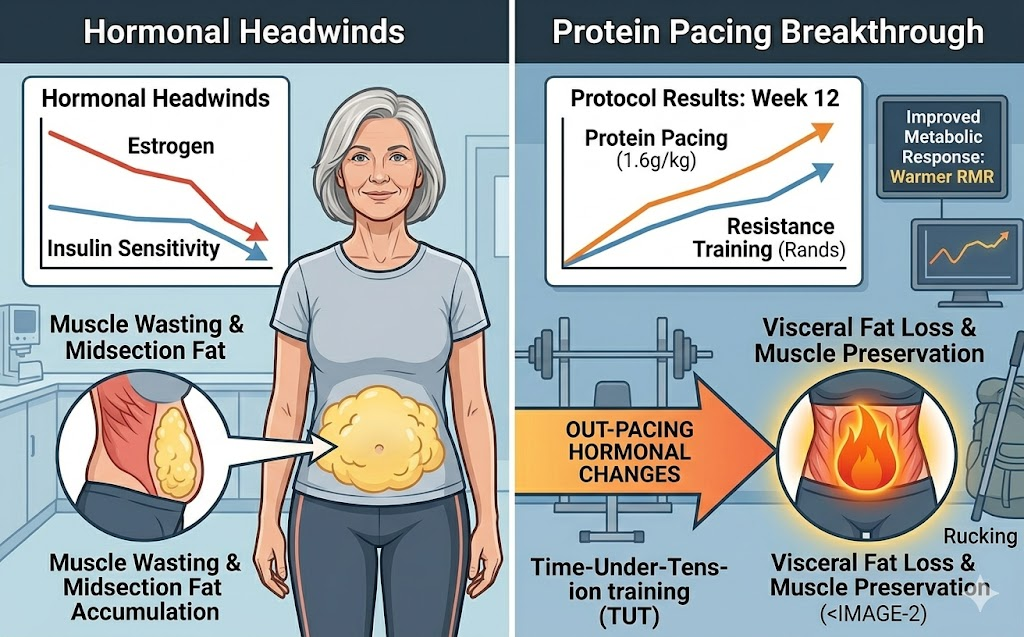
Patient Profile: 55-year-old female, struggling with “menopause belly.”
The Problem: Her estrogen levels had dropped, leading to decreased insulin sensitivity and muscle wasting. She was following a low-calorie, low-protein “diet” that had crashed her resting metabolic rate. Her lab panels showed a severe lack of amino acid turnover.
The Clinical Intervention: We stopped her “diet” and increased her protein to 1.6g per kg of body weight, paced across 5 small meals. We focused on resistance band work to protect her bone density. We utilized C8 MCT Oil to provide non-insulinogenic brain fuel during her morning fast.
The Result: Her “menopause belly” began to shrink for the first time in three years. She showed signs of improved metabolic response, specifically an increase in daytime thermogenesis (she felt “warmer”). Her muscle density showed improvement toward a healthier range, proving that you can out-pace hormonal changes with the right nutritional signaling.
CASE STUDY 3: The “Forever Independent” Senior
Patient Profile: 72-year-old male, fearing loss of mobility.
The Problem: He was eating a “tea and toast” diet. His grip strength was in the bottom 10th percentile—a major longevity red flag. His body was in a state of chronic catabolism, breaking down its own organs for amino acids.
The Clinical Intervention: We introduced a high-collagen protein pacing protocol to support his bulletproof joints. We had him perform loaded carries to signal his body that the protein was needed for structural integrity.
The Result: In six months, his grip strength tripled. He showed signs of improved metabolic response, with a visible increase in forearm and shoulder muscle. His neuro-fitness improved, and he reported feeling “ten years younger.” Protein pacing wasn’t just a fat-loss tool for him; it was a longevity lifeline.
THE RESULTS: What You Can Expect
Immediately (Days 1–7), you will feel a “thermogenic hum”—you may feel warmer after meals. You will notice increased satiety and a sharp reduction in sugar cravings. Intermediate (Weeks 2–6), you will see a noticeable reduction in midsection fat. Your recovery from TUT workouts will speed up significantly. Long-Term (Month 3+), you will experience improved neural and metabolic efficiency over time. You will find it much easier to maintain a lean physique because your “Metabolic Floor” has been raised by increased muscle mass and hormonal balance.
FAQ: Frequently Asked Questions
Q: Won’t too much protein damage my kidneys?
A: In healthy individuals, there is zero clinical evidence that high protein intake causes kidney damage. As a Lab Tech, I monitor BUN and Creatinine levels; they remain stable as long as you stay hydrated and maintain electrolyte balance.
Q: Can I do protein pacing on a vegan diet?
A: Yes, but you must be more intentional. Plant proteins are lower in Leucine, so you often need to eat more total volume or supplement with essential amino acids to hit the thermogenic threshold.
Q: What is the best protein for fat loss?
A: Whey isolate has the fastest absorption for the mTOR “spike,” while whole foods like eggs and beef provide a longer-lasting thermic effect. A mix of both is one effective approach.
Q: Does protein pacing help with cortisol?
A: Yes. Stable blood sugar from protein prevents the “hypoglycemic stress” that triggers cortisol spikes in the late afternoon.
Q: Can I skip breakfast and still do protein pacing?
A: You can, but you’ll need to pace your protein more aggressively in the remaining 8 hours. However, for maximum thermogenesis, an early protein hit is superior.
FINAL TAKEAWAY: The Thermodynamics of Nutrition
In 2026, we have moved past “calories in vs. calories out.” We now understand Nutritional Signaling. Protein pacing is the process of telling your body that it is “safe” to build muscle and “necessary” to burn fat. By prioritizing Post-Prandial Thermogenesis, you are taking control of the internal furnace that dictates your health, energy, and longevity.
Disclaimer: The information provided is for educational purposes only and not medical advice; consult a physician before starting any high-protein or intense exercise protocol. Individual results vary, and use of this clinical data is at your own risk.
References
- NCBI – Protein intake and body composition.
- Harvard T.H. Chan School of Public Health – Protein and healthy eating.
- Cleveland Clinic – Protein and satiety.
- Academy of Nutrition and Dietetics – Protein recommendations.
Next Step: Find Your Metabolic Bottleneck
Are you a Stalled Optimizer or a Metabolic Warrior? Stop guessing and start signaling.
To find out which of your 4 biological pillars is stalling your progress, take our 2-minute diagnostic:
Take the 2026 Bio-Recovery AuditDiscover your score across the 4 Pillars of Performance: Engine, Armor, Cleanup, and Repair.