
Introduction: The Brain-Body Feedback Loop
We’ve been taught to view the gym and the library as two different worlds. One is for the body; the other is for the brain. But in the world of high-performance biology, this is a false dichotomy. Your brain is not a separate entity—it is a motor control center that thrives on complexity.
If you’ve ever felt “brain fog” after an hour of mindless cardio, or felt mentally sharp after a complex game of tennis, you’ve experienced the difference between movement and Neuromotor Exercise. In 2026, we don’t just exercise to burn calories; we exercise to upgrade our “Internal Hardware.”
This guide will teach you how to bridge the gap between your Loaded Carries and your mental focus, turning every workout into a session of high-speed neuroplasticity.

This post is designed to be the ultimate guide for professionals and “Stalled Optimizers” who have the physical side down but are struggling with “Executive Fatigue.”
🧠 What Is Neuro Fitness?
The term “neuro fitness” is often used to describe activities that combine physical movement with mental engagement.
Examples may include:
- Balance exercises
- Coordination drills
- Agility activities
- Reaction-time tasks
- Movement patterns that require focus and attention
These activities are sometimes used to make exercise more engaging while challenging multiple skills at the same time.
🚶 Movement and Cognitive Engagement
Physical activity and mental focus frequently work together during daily life.
Activities such as:
- Walking in busy environments
- Learning new movement skills
- Participating in sports
- Practicing balance exercises
require both physical and cognitive involvement.
Researchers continue to study how physical activity and cognitive function interact throughout life.
THE PROBLEM: The “Mindless Movement” Trap
Most modern fitness routines are built on repetition and boredom. We sit on stationary bikes watching Netflix or walk on treadmills while staring at a wall.
The Reality: When movement becomes automated and mindless, the brain “clocks out.” This leads to Neural Stagnation. You might be getting fit, but you aren’t getting sharper. Chronic “mindless” exercise can even reinforce poor posture and slow reaction times because the brain isn’t actively engaged in the motor pattern.
This is the “Modern Mismatch”: our ancestors had to solve complex problems (tracking prey, navigating terrain) while moving. Today, we’ve separated the two, leading to a decline in Executive Function—the brain’s ability to plan, focus, and multitask.
THE WHAT: Defining Neuro Fitness
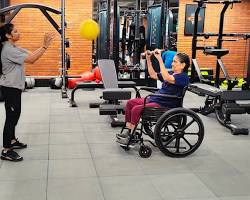
Neuro Fitness (or Dual-Task Training) is the practice of performing a physical task and a cognitively demanding task simultaneously.
The Science of Dual-Tasking
When you combine movement with thinking, you activate the Cerebellum (responsible for coordination) and the Prefrontal Cortex (responsible for decision-making) at the same time.
- BDNF (Brain-Derived Neurotrophic Factor): Exercise acts as “Miracle-Gro” for the brain, releasing BDNF. Cognitive drills then “direct” that growth, telling the brain exactly where to build new neural connections.
- Neuroplasticity: This is the brain’s ability to reorganize itself. Research from the Pacific Neuroscience Institute shows that dual-tasking improves memory and attention far better than doing either task alone.
As a Lab Tech, I explain to my clients that movement is a “biological nutrient” for the brain. By performing movements that require focus—like balancing on one leg or complex mobility flows—you are encouraging your brain to stay adaptable.
THE SOLUTION: The 2026 “Neuro-Drive” Protocol
To upgrade your brain, we don’t just “do more”; we “do differently.” The Neuro-Drive protocol is designed to force your brain out of its comfort zone and into a state of Active Adaptation. We achieve this through a three-pronged attack that layers complexity onto your existing physical habits.
Tier 1: Sensory Engagement (The “Awareness” Layer)
The Concept: Most of us walk through life in a “Default Mode Network” haze—thinking about the past or worrying about the future while our bodies move on autopilot. Tier 1 is about reclaiming your sensory inputs to trigger immediate focus.
How to do it: During your 10-minute post-meal walk, switch from “Internal Looping” to “External Scanning.” Use the 5-4-3-2-1 Technique:
- Identify 5 distinct colors in your environment.
- Listen for 4 different sounds (distant traffic, birds, your own footsteps).
- Notice 3 physical sensations (the wind on your face, the weight of your shoes).
- Find 2 unique textures (the bark of a tree, the cold metal of a gate).
- Acknowledge 1 scent in the air.
Why it works: This forces the brain to process “Real-Time” environmental data. It lowers cortisol and moves you into a state of “Peripheral Awareness,” which is the foundation of high-level cognitive focus.
Common Mistake: Doing this while wearing noise-canceling headphones. To engage your senses, you must actually be available to your environment.
Tier 2: Cognitive Loading (The “Dual-Task” Layer)
The Concept: This is where we add “Mental Software” tasks to your “Physical Hardware” movements. We are essentially “overclocking” your processor by making it manage two distinct streams of data at once.
The Drill Library:
- The Subtract-7 Walk: While walking at a brisk pace, start at 100 and count backwards by 7 (100, 93, 86, 79…). If you lose track, start over.
- The Category Sprint: While performing a Loaded Carry, name one city, one fruit, and one professional athlete for every 10 steps you take.
- The Stroop Effect Step: Use a partner to call out colors. If they say “Blue,” you step left. If they say “Red,” you step right. If they say a color and a number (e.g., “Blue 5”), you must do the opposite.
Why it works: These drills tax your Working Memory and Inhibitory Control. By practicing these under the physical “stress” of movement, you are training your brain to stay calm and analytical when your heart rate is elevated—a vital skill for high-stakes business meetings or athletic performance.
Common Mistake: Choosing tasks that are too easy. If you can do the math without thinking, you aren’t building new neural connections. If it feels “clunky” and frustrating, you’re doing it right.
Tier 3: Proprioceptive Challenge (The “Real-Time” Layer)
The Concept: Proprioception is your “sixth sense”—it’s your brain’s ability to know where your body is in space without looking. Tier 3 uses instability and complex movement patterns to require constant, millisecond-by-millisecond neural corrections.
The Drill Library:
- The Blind Balance: Stand on one leg on a soft surface (like a pillow or foam pad). Once stable, close your eyes. Try to maintain this for 30 seconds.
- The Figure-8 Carry: Instead of walking in a straight line during your Farmer’s Carries, walk in a tight Figure-8 pattern. The shifting center of gravity forces your core and your brain to constantly recalibrate.
- The Unilateral “Switch”: Hold a weight in only one hand (a “Suitcase Carry”). Every 10 steps, stop, transition the weight to the other hand behind your back or between your legs, and continue without losing momentum.
Why it works: These movements activate the Cerebellum, the part of your brain that handles coordination and fine motor control. When the cerebellum is challenged, it communicates more intensely with the prefrontal cortex, leading to improved “Neural Speed” and faster reaction times.
Common Mistake: Sacrificing safety for challenge. Always perform Tier 3 drills in a clear space where you won’t trip on furniture. The goal is a “controlled wobble,” not a fall.
🧍 What This Means in Daily Life
Many people naturally combine movement and thinking during everyday activities.
Examples include:
- Navigating unfamiliar locations
- Learning new exercise routines
- Participating in recreational sports
- Performing tasks that require coordination
Exercises that combine movement with attention and coordination may offer variety and help maintain engagement with physical activity.
⚠️ Important Perspective
Neuro fitness activities should be viewed as part of a broader approach to health and wellness.
Factors that influence cognitive and physical performance include:
- Sleep
- Nutrition
- Physical activity
- Stress management
- Overall health status
No single exercise method can guarantee specific cognitive outcomes.
SYNERGY: How the Tiers Work Together
In the Neuro-Drive Protocol, we don’t just do one Tier and call it a day. We layer them.
Imagine you are doing your Day 4 Math Carry:
- You are physically under tension (The Carry).
- You are navigating a complex path around obstacles (Tier 3: Proprioception).
- You are solving multiplication problems (Tier 2: Cognitive Loading).
- You are maintaining awareness of your breathing and surroundings (Tier 1: Sensory).
When you stack these layers, you create a Neural Demand that simply doesn’t exist in a traditional gym workout. You are training your brain to be an “Executive Operator” rather than just a passenger. This is the hallmark of the Metabolic Warrior—the ability to maintain high-level cognitive function even when the body is under physical or metabolic stress.
To ensure your brain has the chemical “fuel” to build these new connections, make sure you are optimizing your Magnesium intake and monitoring your Recovery Data to avoid over-taxing your nervous system.
THE COMMON MISTAKES: Why Puzzles Aren’t Enough
Before we get to the drills, we have to address the “Brain Game” myth.
1. The “App” Fallacy
Playing “brain training” games on your phone while sitting on the couch has almost zero “transferability” to real-life focus. To change the brain, you need the Systemic Arousal that only comes from physical movement.
2. Over-Complicating the Drill
If a drill is so hard that you trip and fall, you’ve crossed the line into “Neural Overload.” The goal is Challenge, not Chaos.
3. Lack of Progression
Just like lifting weights, if you do the same “mental math” every day, your brain adapts and stops growing. You must constantly introduce “Novelty.”
THE HOW: The Neuro-Fitness Integration Table
| Activity | Focus Level | Neural Benefit | Clinical Objective |
| Balance Drills | High | Cerebellum engagement | Improve stability and coordination. |
| Complex Flows | High | BDNF support | Support neuroplasticity and cognitive function. |
| Tempo Training | Medium | Motor unit recruitment | Improve “neural drive” to specific muscle groups. |
| Post-Meal Walking | Low | Sensory integration | Help manage stress and flatten glucose spikes. |
Case Study 1: The “Foggy” Executive
Problem: Mark, 52, felt his decision-making speed was slowing down. He did 30 minutes of jogging daily but felt “drained” afterward.Solution: we replaced his jogging with a “Cognitive Walk.” Every 2 minutes, he had to perform a mental task (like naming 10 cities starting with ‘S’) while maintaining his pace.Result: His Wearable Stress Scores during work hours dropped, and his “Mental Clarity” score doubled within 3 weeks.
Case Study 2: The Stalled Athlete
Problem: Sarah was strong but “clunky.” Her reaction time in sports was lagging.Solution: We added “Reaction Drills” to her Loaded Carries. While carrying weight, a partner would call out “Left” or “Right,” and she had to pivot instantly.Result: Sarah reported feeling “lighter” on her feet and significantly faster in her decision-making during high-pressure situations.
THE RESULTS: What You Can Expect
- Immediately: Better balance and a feeling of being more “centered.”
- Days 14–21: Improved learning of new physical skills and mental clarity.
- Day 30+: Improved neural efficiency over time, making your recovery periods more effective.
TROUBLESHOOTING: Why Your Brain Might be “Guarding”
- Neural Fatigue: If you are over-trained, your nervous system may reduce power output to prevent injury. Rest is a neural necessity.
- Distraction: If you are watching TV or scrolling your phone during a workout, you are significantly reducing the benefits of the brain-body connection.
- Electrolyte Balance: Your nervous system depends on proper electrolyte balance. If you are low on magnesium or potassium, your neural signals can become “noisy” and weak.
THE 7-DAY NEURO-FITNESS PROTOCOL
This is a day-by-day plan to integrate brain training into your existing routine.
Day 1: The “Audit of Awareness”
- The Action: During your 10-minute post-meal walk, practice “External Scanning.” Every 60 seconds, name 3 things you see, 2 things you hear, and 1 thing you smell.
- The Goal: Moving from “Internal Looping” (worrying about work) to “External Engagement.”
- Common Mistake: Doing this while listening to a podcast. Silence is required for Day 1.
Day 2: The Working Memory Walk
- The Action: Walk at a brisk pace. Start at 100 and count backwards by 7 (100, 93, 86…).
- The Why: This taxes your “Working Memory”—the ability to hold and manipulate information.
- The Feel: You will find that your walking pace naturally slows down. Force yourself to keep the pace steady.
Day 3: Balance & Recall (The “Armor” Drill)
- The Action: Stand on one leg (or a Bosu ball). Have someone give you a list of 7 random items. Balance for 60 seconds, then recall the list.
- The Why: Balance requires massive “Cerebellar” resources. Adding a recall task forces the Prefrontal Cortex to work under pressure.
- Internal Link: This is great for building the “Armor” pillar of your Bio-Recovery Audit.
Day 4: The “Math Carry” (Tier 3)
- The Action: Perform a Farmer’s Carry. While walking with the weights, solve simple multiplication problems (8×7, 12×4).
- The Why: Heavy carries trigger a “survival” signal. Solving math in this state teaches your brain to stay “Cool under fire.”
- The Feel: This is surprisingly difficult. It builds “Executive Resilience.”
Day 5: Reactionary Tapping
- The Action: Set up three “targets” (could be shoes or cones). Have a partner (or an app) call out a color or number. Tap it and return to center as fast as possible.
- The Why: This builds “Neural Speed” and “Agility.”
- Common Mistake: Going too fast and losing form. Precision over speed.
Day 6: The “Complex Flow”
- The Action: Perform a movement you aren’t good at (like a Kettlebell Flow or a Yoga sequence). Focus entirely on the “Transition” between moves.
- The Why: Novelty is the primary driver of neuroplasticity. Once a move is easy, it’s no longer “Neuro Fitness.”
Day 7: The “Deep Focus” Audit
- The Action: Review your work productivity for the week. Was it easier to stay on task?
- The Goal: Recognizing that your physical training is now serving your mental output.
WHY IT WORKS: The Growth Factor (BDNF)
Neuro Fitness works because it creates a Biological Demand for new connections.
- Movement opens the “Window of Plasticity” by increasing blood flow and oxygen.
- Cognitive Challenge then “writes” the new code into your neural pathways.
This synergy is enhanced when your internal environment is optimized. For example, Magnesium is essential for the “synaptic plasticity” required to turn these drills into permanent brain upgrades.
WHO IS THIS FOR? (The Target Audience)
- Professionals (30+): To combat the “brain drain” of long hours and sedentary work.
- Students: To improve information retention and testing focus.
- Seniors: To maintain balance and cognitive longevity (Neuro-protective).
- The “Brain Fog” Sufferer: To “reset” the nervous system via Vagus Nerve Stimulation.
WHEN IT WON’T WORK: The “Over-Stress” Clause
- Chronic Burnout: If you are in deep burnout, more “challenge” is not the answer. You need Recovery & Sleep first.
- Lack of Consistency: Doing one drill once a week won’t change your brain. Neuroplasticity requires “Frequency.”
- Distraction: If you are trying to do neuro drills while scrolling your phone, you are actually training your brain to be more distracted.
FAQ: Performance Science Deep Dive
Q: Is Neuro-Fitness only for cognitive health?
A: No. While it supports brain health, athletes use it to improve reaction time, coordination, and overall movement efficiency.
Q: Can I do this at home?
A: Absolutely. Most Neuro-Fitness drills require zero equipment—just space to move and the willingness to focus.
FINAL TAKEAWAY: Build a Better Machine
Your brain is the most expensive piece of equipment you own. Stop treating it like a passenger in your body and start treating it like the Driver.
By combining the physical “Engine” of your workouts with the cognitive “Software” of these drills, you move from being a Stalled Optimizer to a Metabolic Warrior.
Ready to see how your brain and body are recovering? Check your HRV and Sleep Data to ensure you’re ready for the next challenge.
⚠️ Disclaimer
This article is for educational purposes only and does not provide medical advice. Activities discussed are intended as general fitness and wellness information. Individual experiences and outcomes may vary.
📚 References
- National Institutes of Health (NIH)
- National Institute on Aging (NIA)
- National Center for Biotechnology Information (NCBI)
- Harvard Health Publishing
- Cleveland Clinic
Next Step: Find Your Metabolic Bottleneck
Are you a Stalled Optimizer or a Metabolic Warrior? Stop guessing and start signaling.
To find out which of your 4 biological pillars is stalling your progress, take our 2-minute diagnostic:
Take the 2026 Bio-Recovery AuditDiscover your score across the 4 Pillars of Performance: Engine, Armor, Cleanup, and Repair.