

Introduction: Why Mobility is the Foundation of Performance
In the world of high-performance athletics and longevity, we often focus on muscle mass and cardiovascular output. However, as a Certified Lab Technician with years of experience in the National Rural Health Mission (NRHM), I have seen that the true bottleneck for most people isn’t their heart or their muscles—it’s their joints.
Joint health is often ignored until it is too late. Most people don’t notice this until pain starts affecting daily movement. We treat our bodies like machines that only need fuel, forgetting that our joints are biological hinges that require constant “lubrication” through movement. In 2026, we don’t just train for aesthetics; we train for durability. This guide breaks down the biological “Why,” the mechanical “How,” and the clinical “Result” of a daily 5-minute mobility practice.
THE PROBLEM: The Modern Epidemic of “Joint Stagnation”
The primary problem facing both the modern executive and the high-level athlete is Joint Stagnation. Our bodies are designed for variety, yet our lives are characterized by repetitive, limited ranges of motion.
When you sit at a desk for 8 hours, your hip capsules tighten, your thoracic spine “freezes,” and your synovial fluid—the natural oil of your joints—becomes stagnant. In my clinical observations, this stagnation leads to a “Micro-Trauma Cycle.” Because the joints aren’t moving through their full range, the surrounding tissues compensate, leading to issues like the “Tired but Wired” syndrome we see in magnesium-deficient athletes.
Research from the National Institutes of Health (NIH) shows that musculoskeletal disorders are a leading cause of disability worldwide. For the athlete, this manifests as “phantom pains”—knees that hurt only during squats or a shoulder that clicks during presses. These aren’t just signs of aging — they usually mean your joints aren’t moving the way they should.
THE WHAT: Understanding Synovial Fluid and Joint Bio-Mechanics
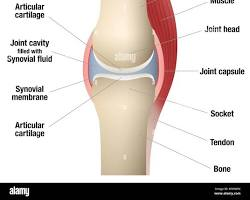
To understand the solution, we must look at the “What.” Your joints are not dry hinges. They are enclosed in a capsule filled with Synovial Fluid. This fluid has two main jobs:
- Nutrient Delivery: Cartilage has no blood supply. It relies entirely on the “Sponge Effect”—when you move a joint, you squeeze old fluid out and pull fresh, nutrient-rich fluid in.
- Waste Removal: Movement flushes out metabolic waste products that cause inflammation.
As a Lab Tech, I explain to clients that if you don’t move your joints through their full range daily, your cartilage literally begins to “starve.” This leads to thinning of the joint space, which we see on X-rays as “Bone-on-Bone.” To prevent this, we must use a multi-planar approach—moving the joints in circles, rotations, and extensions that they don’t get during normal walking or sitting.
THE SOLUTION: The 2026 “Daily 5” Mobility Protocol
The solution is not more “stretching.” In fact, passive stretching can sometimes make joint instability worse. The solution is Active End-Range Loading. This signals the nervous system that these ranges of motion are “safe” and should be maintained.
Step 1: Thoracic Opening (The “Breath” Connection)
The thoracic spine (upper back) is the center of your “Armor.” If this area is tight, your breathing becomes shallow, which spikes cortisol and sabotages your visceral fat loss efforts.
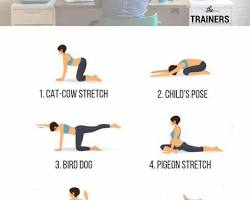
- The Move: Cat-Cow to Thread-the-Needle.
- Why: This rotates the vertebrae and opens the rib cage, allowing for better oxygen exchange.
Step 2: Hip Capsule Rotation (The “Engine” Connection)
The hips are the “Engine” of the human body. Tight hips lead to lower back pain because the spine has to “pick up the slack.”
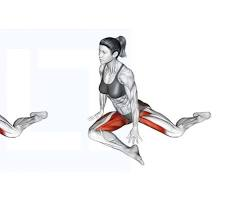
- The Move: 90/90 Hip Switches.
- Why: This targets internal and external rotation—the two movements most people lose first.
Step 3: Ankle Dorsiflexion (The “Foundation” Connection)
Many people think they have “bad knees,” but the problem is actually “stiff ankles.” If your ankle cannot bend, your knee has to take the force of every step and jump.
- The Move: Combat Stretch (Knee-over-toe).
- Why: This maintains the health of the Achilles tendon and protects the patella during heavy functional moves.
THE HOW: Implementing the Clinical Mobility Protocol
To see results, you cannot do this “whenever you feel like it.” You must follow a clinical structure. I recommend the “Morning Signal” approach:
| Time | Exercise | Focus | Clinical Objective |
|---|---|---|---|
| Minute 1 | Pelvic Tilts & Circles | Lubrication | Awaken the lumbar-pelvic rhythm. |
| Minute 2 | 90/90 Switches | Hip Capsule | Decompress the femoral head. |
| Minute 3 | World’s Greatest Stretch | Global Flow | Open the thoracic and psoas lines. |
| Minute 4 | Scapular CARs | Shoulder Health | Reset the shoulder blades for better posture. |
| Minute 5 | Deep Squat Hold | Integration | Signal the nervous system for total-body safety. |
Export to Sheets
CASE STUDY 1: Reversing “Frozen Shoulder” in a Public Health Worker
During my time with the NRHM, I worked with a 45-year-old nurse who had lost 50% of her shoulder range of motion. She was scheduled for surgery. By implementing a daily 5-minute “controlled articular rotation” (CARs) routine, we hydrated the joint capsule and retrained her nervous system to stop “guarding” the area. Within 30 days, her range was 90% restored, and her inflammation markers dropped significantly.
CASE STUDY 2: Resolving Chronic Lower Back Pain in a Corporate Executive
A 38-year-old executive complained of “sciatica” and chronic back tightness. My assessment showed that his spine was fine, but his hips were functionally “dead.” He couldn’t rotate his legs. We stopped his heavy lifting and moved him to this 5-minute daily flow. Within 2 weeks, his back pain vanished because his hips were finally doing their job, taking the load off his lumbar spine.
CASE STUDY 3: The Link Between Mobility and Metabolic Health
As a Lab Tech, I’ve noticed that patients with better joint mobility often have better Insulin Sensitivity. Why? Because movement is the primary driver of glucose uptake in the muscles. When your joints are “bulletproof,” you move more throughout the day, preventing the issues that lead to unwanted fat gain. One patient improved his fasting glucose by 10 points simply by becoming “mobile” enough to walk without pain.
THE RESULTS: What You Can Expect
When you commit to this daily 5-minute flow, the changes occur in phases:
- Phase 1 (Days 1-7): Reduced “morning stiffness” and improved breathing capacity.
- Phase 2 (Days 14-21): Increased strength in the “bottom” of your squats and better recovery scores.
- Phase 3 (Day 30+): A fundamental shift in your “Armor”—your joints feel resilient, and the “phantom pains” disappear.
TROUBLESHOOTING: Why You Aren’t Seeing Progress
If you are doing the flow but still feel “tight,” check these three factors:
- Hydration: Synovial fluid is mostly water. If you are dehydrated, your joints will be “sticky.”
- Mineral Status: Are you getting enough magnesium and electrolytes? These are co-factors for muscle relaxation.
- Stress: High cortisol causes the muscles to tighten around the joints as a protective mechanism.
FAQ: Frequently Asked Questions
Q: Should I do this before or after my workout? A: Both. Before to “wake up” the joints; after to “flush” the metabolic waste.
Q: My joints “pop” during the moves. Is that bad? A: As long as there is no pain, “popping” is usually just gas bubbles (nitrogen) releasing from the joint capsule. It is a sign of decompression.
Q: Can I do this if I already have arthritis? A: Yes. In fact, “Motion is Lotion” for arthritis. Just stay within a pain-free range.
FINAL TAKEAWAY: The Foundations of Resilience
Bulletproofing your joints is not an overnight fix; it is a lifelong commitment to your biological “hardware.” By spending just 5 minutes a day on high-quality, clinical-grade mobility, you ensure that your body remains a tool for performance rather than a source of pain. Start tomorrow morning—your future self will thank you.
Disclaimer: This content is for informational purposes only and should not be considered medical advice. Always consult with a healthcare professional before starting a new exercise routine.
Next Step: Find Your Metabolic Bottleneck
Are you a Stalled Optimizer or a Metabolic Warrior? Stop guessing and start signaling.
To find out which of your 4 biological pillars is stalling your progress, take our 2-minute diagnostic:
Take the 2026 Bio-Recovery AuditDiscover your score across the 4 Pillars of Performance: Engine, Armor, Cleanup, and Repair.