

Introduction: Why Most Beginners Fail (And How to Avoid It)
Starting a fitness journey at home sounds simple, but most beginners quit within the first few weeks. Not because they lack motivation—but because they lack structure. They follow random workouts from different sources, switch routines frequently, and expect fast results without giving their body time to adapt.
The real problem isn’t effort—it’s confusion.
Many beginners believe they need long workouts, complex exercises, or expensive equipment to see results. In reality, the opposite is true. A simple, structured full-body workout plan—done consistently—can deliver far better results than scattered, high-intensity routines.
This guide is designed to remove that confusion completely. Instead of giving you another short workout, it provides a complete system you can follow at home. You’ll understand what to do, why it works, and how to progress over time.
If you follow this properly, you won’t just “exercise”—you’ll build a routine that actually sticks. When I first started trying full body workouts at home for beginners, I honestly felt confused and hesitant. I didn’t know where to start,what exercises were safe, or whether home workouts would even work without equipment. Like many beginners, the fear of doing exercises incorrectly or giving up halfway was real.
From my experience, starting simple made everything easier to stick with. Small, consistent movements felt more realistic than complicated gym routines. Over time, I noticed gradual improvement in strength, confidence, and energy levels—without pressure or extreme promises.
This article is written especially for beginners who want clear, safe, and practical guidance to start working out at home without fear.
Why Full Body Workouts Are Ideal for Beginners
Full body workouts are the most effective starting point because they train multiple muscle groups in a single session. Instead of isolating one muscle per day, you engage your entire body, which improves coordination, strength, and calorie burn simultaneously.
For beginners, this approach has several advantages. First, it allows you to train fewer days per week while still getting complete coverage. This reduces burnout and makes it easier to stay consistent. Second, full body routines improve movement patterns, which are essential before moving on to more advanced training styles.
Another key benefit is metabolic impact. When you train larger muscle groups together—like legs, glutes, and core—you naturally increase energy expenditure. This supports fat loss while also building lean muscle.
Most importantly, full body workouts simplify decision-making. Instead of wondering what to train each day, you follow a clear structure. And when there’s less confusion, there’s a higher chance you’ll stay consistent..
The Beginner Mindset: What Actually Matters
Before jumping into exercises, it’s important to understand what really drives results.
Consistency is more important than intensity. Doing a moderate workout three times a week for months will always outperform extreme workouts done for a week and abandoned.
Progression is also critical. Your body adapts quickly, so doing the same routine without change will eventually stop producing results. Small improvements—more reps, better form, shorter rest—are what lead to long-term progress.
Patience is the final piece. Beginners often expect visible changes within days, but real transformation happens gradually. Strength improves first, then endurance, and only later do visible physical changes appear.
If you focus on these three principles—consistency, progression, and patience—you’ll already be ahead of most beginners.
Weekly Workout Structure (Simple and Sustainable)
A structured weekly plan removes guesswork and helps you stay consistent.
- Day 1: Full Body Workout
- Day 2: Light activity (walking or stretching)
- Day 3: Full Body Workout
- Day 4: Rest
- Day 5: Full Body Workout
- Day 6: Optional light movement
- Day 7: Rest
This schedule gives your body enough stimulus to improve while also allowing recovery. Recovery is where your muscles repair and grow stronger, so skipping rest days can actually slow your progress.
For beginners, training three times per week is more than enough. The goal is not to exhaust yourself, but to create a sustainable routine that you can follow for months.
Warm-Up: Preparing Your Body for Movement
A proper warm-up is often overlooked, but it plays a crucial role in performance and injury prevention.
When you warm up, you increase blood flow to your muscles, improve joint mobility, and prepare your nervous system for exercise. This makes your movements more efficient and reduces the risk of strain.
A simple warm-up routine can include arm circles, light squats, and basic dynamic movements. Even five minutes is enough to make a noticeable difference.
Skipping this step might save a few minutes, but it increases the chances of poor form and discomfort during the workout. Over time, that can lead to setbacks.
Think of the warm-up as a transition phase—it prepares your body to move better, not just harder.
Why home workouts are beginner-friendly
- No gym pressure
- No expensive equipment
- Flexible timing
- Easy to stay consistent
From my experience, home workouts remove mental barriers and help beginners focus on building a habit first.
Read More :5-Step Beginner Full-Body Workout at Home – Start Without a Gym Easily
Preparing for Your Home Workout
Before beginning, make sure your environment is safe and comfortable. You’ll need:
- Comfortable clothing and shoes
- A small open space to move freely
- Water for hydration
- A mat for comfort during floor exercises (optional)
No weights, resistance bands, or machines are required, making this routine perfect for beginners or anyone restarting fitness.
The Full Body Workout Routine (Step-by-Step)
This routine focuses on fundamental movement patterns that build strength and stability.
Squats
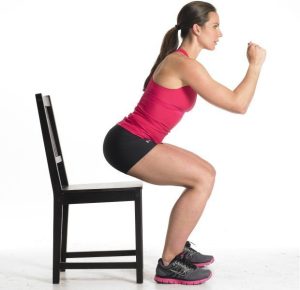
Squats are one of the most effective exercises for beginners because they train your lower body while also improving balance and coordination. They target the quadriceps, hamstrings, and glutes, which are some of the largest muscle groups in the body.
When performing a squat, focus on pushing your hips back rather than bending forward. Keep your chest upright and your weight evenly distributed through your feet. Start with 10–15 repetitions.
If the movement feels difficult, you can use a chair for support. Over time, as your strength improves, you’ll be able to perform deeper and more controlled squats.
Recommended reps: 10–15
Push-Ups
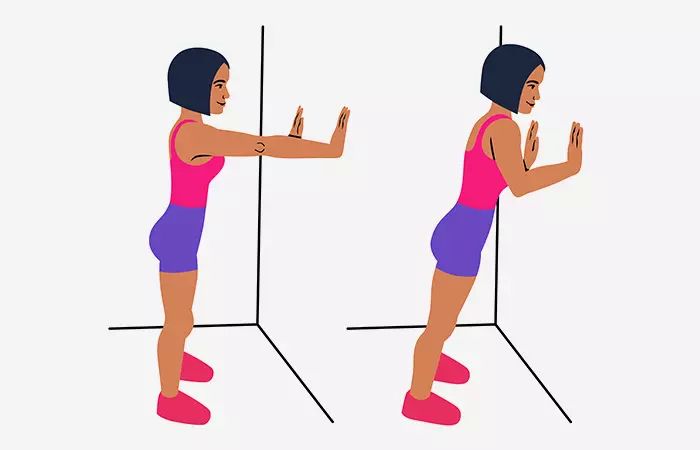
Push-ups are a foundational upper-body exercise that strengthens the chest, shoulders, and arms. They also engage the core, making them a compound movement.
Beginners often struggle with full push-ups, and that’s completely normal. You can modify the exercise by performing it on your knees or against a wall.
Focus on maintaining a straight body line and controlled movement. Aim for 8–12 repetitions, adjusting based on your current strength level.
Recommended reps: 8–12
Glute Bridges (Lower Back & Glutes)
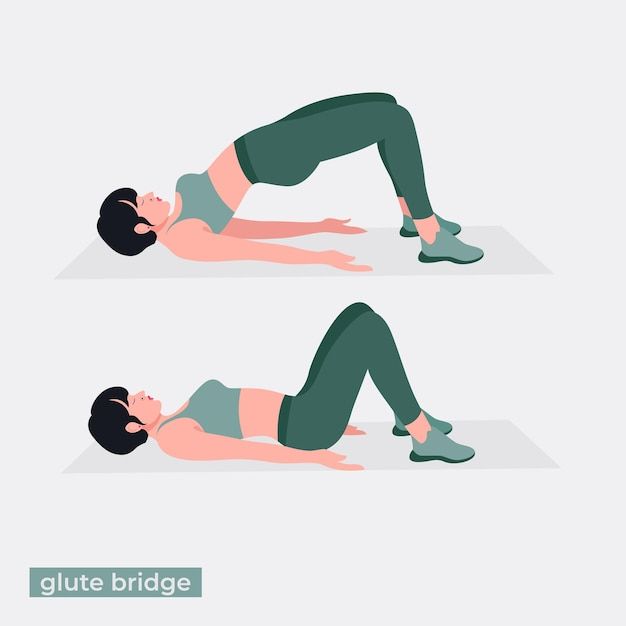
The glute bridge focuses on activating the glutes and supporting the lower back. Many beginners have weak glutes due to prolonged sitting, so this exercise is especially valuable.
Lie on your back, bend your knees, and lift your hips upward while squeezing your glutes. Hold briefly at the top before lowering down.
Perform 12–15 repetitions with controlled movement.
Lunges
Lunges improve lower body strength while also enhancing balance and coordination. They target the legs and glutes, but also require core stability.
Take a controlled step forward, lower your body, and push back to the starting position. Perform 8–10 repetitions per leg.
This exercise may feel challenging at first, but it becomes easier as your balance improves.
Plank
The plank is a simple but highly effective core exercise. It strengthens the muscles that support your spine and improves overall stability.
Hold the plank position for 20–30 seconds, keeping your body in a straight line. Avoid letting your hips drop or rise too high.
As your strength improves, you can gradually increase the duration.
How to Progress Over Time
Progression is what turns a basic routine into a results-driven system.
In the first two weeks, focus on learning proper form and building consistency. Perform two rounds of the workout and take adequate rest between exercises.
In weeks three and four, increase to three rounds and slightly raise the number of repetitions. You can also reduce rest time to increase intensity.
How to Progress Over Time
Progression is what turns a basic routine into a results-driven system.
In the first two weeks, focus on learning proper form and building consistency. Perform two rounds of the workout and take adequate rest between exercises.
In weeks three and four, increase to three rounds and slightly raise the number of repetitions. You can also reduce rest time to increase intensity.
After a month, you can begin to challenge yourself further by adding more repetitions, increasing time under tension, or incorporating variations of the exercises.
These small adjustments signal your body to adapt, which leads to strength and endurance improvements.
Common Mistakes Beginners Should Avoid
One of the biggest mistakes beginners make is trying to do too much too soon. This often leads to burnout or injury.
Another common issue is inconsistency. Skipping workouts or frequently changing routines prevents your body from adapting properly.
Poor form is also a concern. Performing exercises incorrectly reduces effectiveness and increases the risk of discomfort.
Lastly, many beginners focus only on fat loss and ignore strength building. In reality, building strength improves metabolism and makes fat loss more sustainable.
Avoiding these mistakes will make your progress smoother and more consistent.
What Results to Expect (Realistic Timeline)
Understanding what to expect helps you stay motivated.
In the first one to two weeks, you may notice increased energy and slight improvements in coordination. By weeks three to four, your strength and endurance will begin to improve noticeably.
Visible physical changes usually take longer—around six to eight weeks of consistent effort. This varies depending on diet, sleep, and overall lifestyle.
The key is not to rush the process. Fitness is a long-term journey, and sustainable progress always beats quick results.
SAFETY & TRUST SECTION
Always listen to your body and stop if you feel pain.
I have seen this approach work for many beginners when followed consistently and patiently.
For general physical activity guidance, beginners can refer to organizations like the World Health Organization (WHO).
FAQ
1. Are full body workouts good for beginners?
Yes. Full body workouts are ideal for beginners because they train all major muscle groups and help build strength evenly.
2. Can beginners do full body workouts at home without equipment?
Yes. These workouts use only bodyweight and can be done at home without any equipment.
3. How many times a week should beginners do full body workouts?
Beginners can do full body workouts 3–4 times per week with rest days in between.
4. Do full body workouts help with weight loss?
Yes. Full body workouts burn calories and improve metabolism, which supports weight loss when combined with a healthy diet.
5. How long should a beginner full body workout be?
A beginner workout can be 15–30 minutes, depending on fitness level and intensity.
6. Is it safe to do these workouts every day?
Beginners should avoid daily workouts and allow time for muscle recovery.
7. Do I need to warm up before starting these workouts?
Yes. A short 5-minute warm-up helps prevent injuries and improves performance.
8. Can these workouts build muscle without equipment?
Yes. Bodyweight exercises can build strength and muscle when done consistently.
9. Are these workouts suitable for all ages?
Most beginners can do them, but older adults or people with health issues should consult a doctor first.
10. How long does it take to see results?
With consistency, beginners may start noticing improvements in strength and stamina within 2–4 weeks.
Final Thoughts: Keep It Simple and Stay Consistent
You don’t need complicated workouts or perfect conditions to get started. What you need is a simple plan that you can follow consistently.
This full-body routine provides exactly that. It covers all major muscle groups, builds foundational strength, and allows for gradual progression.
If you commit to this system and stay patient, you will see results—not just physically, but in your energy, confidence, and overall health.
Start small, stay consistent, and let progress build naturally.
Originally posted 2026-01-10 16:05:55.
Next Step: Find Your Metabolic Bottleneck
Are you a Stalled Optimizer or a Metabolic Warrior? Stop guessing and start signaling.
To find out which of your 4 biological pillars is stalling your progress, take our 2-minute diagnostic:
Take the 2026 Bio-Recovery AuditDiscover your score across the 4 Pillars of Performance: Engine, Armor, Cleanup, and Repair.